
Fan-leaved willow
Salix flabellaris
Description
Growing requirements
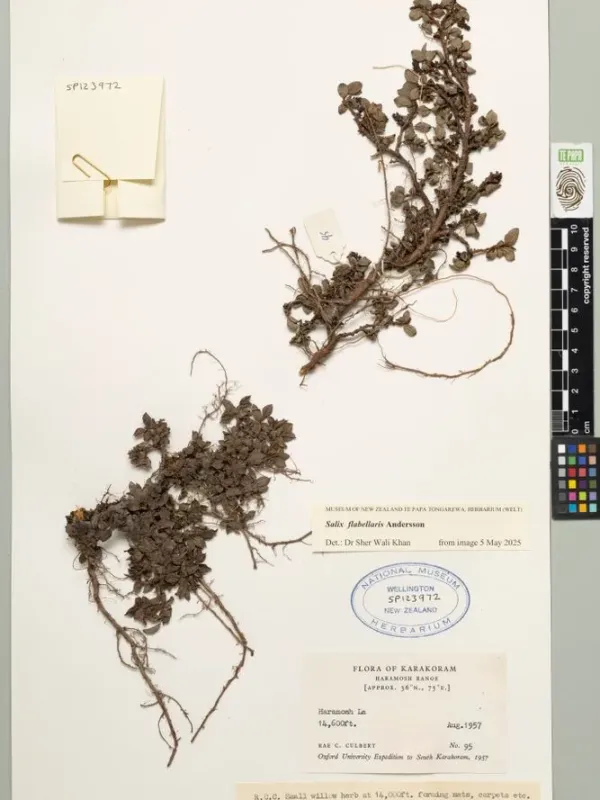
The fan-leaved willow (Salix flabellaris) is a prostrate shrub belonging to the Salicaceae family. Native to the alpine regions of the Himalayas, this plant is specifically adapted to high-altitude environments, where it grows low to the ground to withstand harsh winds and cold temperatures.
Its botanical structure includes small, fan-shaped leaves and flexible stems that can root along the nodes. This habit allows the plant to form low-lying, dense mats, making it an excellent ground cover for alpine gardens and stabilization of rocky slopes.
Climatic requirements are strict: the plant thrives in cool, humid environments. It struggles in areas with intense heat and high summer temperatures, which often lead to dehydration and stress for this alpine species. Providing a cooler microclimate is essential for survival.
Soil requirements focus on permeability and drainage. The fan-leaved willow demands gritty, rocky, or sandy soil conditions. It is highly intolerant of waterlogged, heavy clay soils, which promote fungal infections and root rot in the root system.
Regarding its use, this willow is primarily ornamental. It is highly valued by horticulturists for rockeries and containers. Its ability to create a dense vegetative cover helps protect the soil surface and adds a distinct texture to landscape designs in mountainous or cool regions.