
Flacourtia jangomas
Flacourtia jangomas
Description
Growing requirements
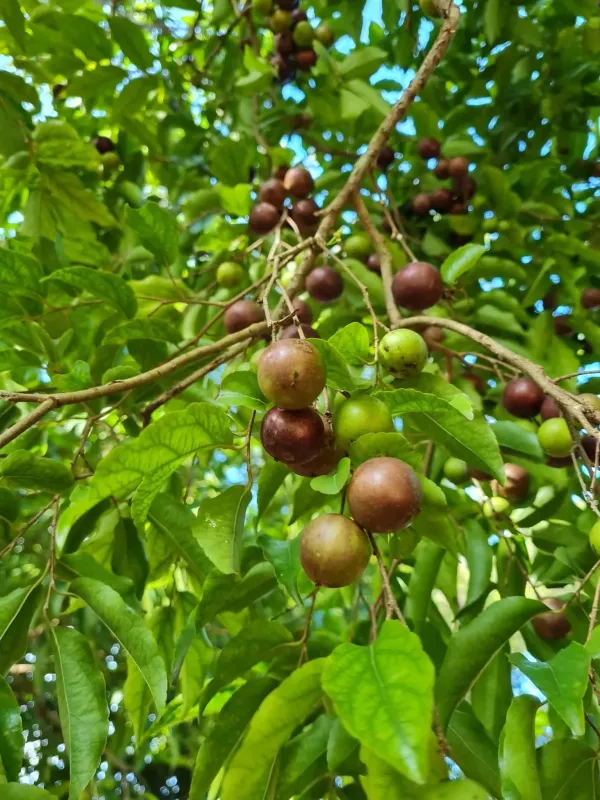
Flacourtia jangomas, commonly known as paniala, is a significant fruit-bearing tree belonging to the Salicaceae family. The plant is characterized by its distinct thorny trunk and branches, serving as a natural defense, while its foliage displays an attractive transition from reddish hues in young leaves to deep green in maturity.
This species is native to tropical regions of Southern and Southeastern Asia, thriving in warm and humid environments. It requires a frost-free climate for consistent development, as it lacks cold hardiness and is highly susceptible to chilling injury, which significantly impacts its metabolic processes.
Regarding soil requirements, Flacourtia jangomas prefers well-drained, fertile substrates that facilitate healthy root respiration. While it can adapt to various soil types, including alluvial soils and slightly acidic loams, the absolute priority is the prevention of waterlogging to avoid root rot pathogens.
Agronomic management involves periodic canopy thinning through selective pruning, which optimizes light penetration and improves fruit quality. Supplemental irrigation is vital during the fruit enlargement stage, especially in regions with distinct dry seasons, to ensure high yields and prevent fruit shriveling.
The tree serves various economic purposes, primarily for its edible drupes. These fruits are utilized in the manufacturing of traditional preserves, jellies, and fermented beverages. Furthermore, the tree is frequently utilized in agroforestry systems and as a living barrier due to its dense, thorny nature.
Main diseases and pests
The tree is generally robust; however, it remains susceptible to leaf spot diseases when cultivated in areas with excessive rainfall and poor drainage. Maintaining adequate spacing between trees is a primary cultural practice to improve air circulation and naturally suppress pathogen spread in the orchard.
Insect pests, including various species of scales and fruit flies, may pose a threat during the maturation phase. Implementing integrated pest management (IPM) strategies, such as physical traps and promoting beneficial predatory insects, is effective in maintaining plant vigor without excessive chemical interventions.