
Ehrhart's Willow
Salix ehrhartiana
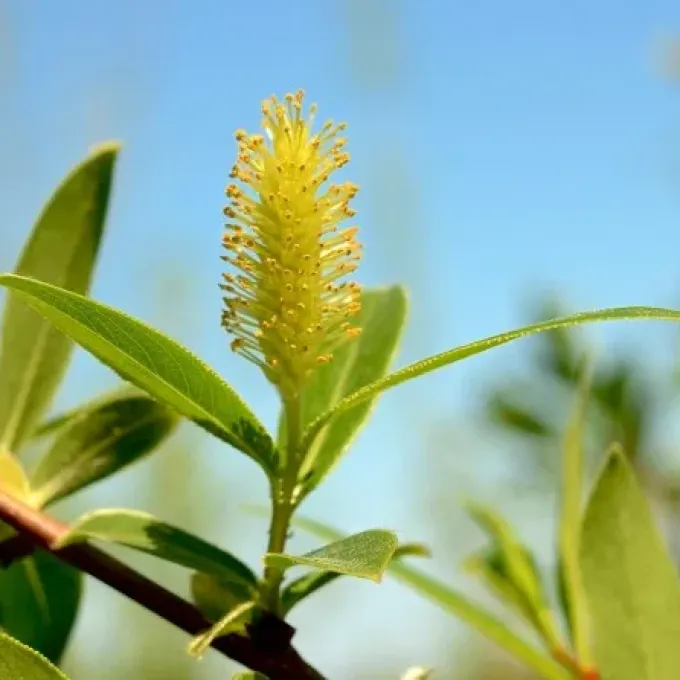
Description
Growing requirements
Ehrhart's Willow (Salix ehrhartiana) is a hybrid species belonging to the Salicaceae family. It is a perennial woody plant characterized by rapid development and high adaptability to temperate climates.
The plant thrives in moist, fertile soils, preferring loamy or alluvial substrates. It is particularly well-suited for riparian areas where soil moisture remains consistently high throughout the growing season.
Ehrhart's Willow is a light-demanding crop, requiring full exposure to sunlight to reach its maximum biological potential. It shows excellent cold tolerance, making it suitable for regions with harsh winter conditions.
Cultivation practices involve proper soil preparation, including deep plowing and weed control before planting. Vegetative propagation via stem cuttings is the standard method for establishing new plantations.
Regular irrigation is critical during the establishment phase, especially in the first year. Once the root system is well-developed, the plant becomes more resilient to minor fluctuations in environmental conditions.
Yield
The primary economic focus of this crop is biomass production. Due to its fast growth rate, it serves as a highly efficient source of renewable energy, particularly for the production of wood chips and pellets.
Managed plantations can be harvested on a short-rotation cycle, typically every 3 to 5 years. The root system remains productive for multiple decades, allowing for consistent yield across several harvesting cycles.
Beyond energy applications, Ehrhart's Willow is utilized for land rehabilitation and erosion control. Its expansive root network stabilizes riverbanks and prevents soil degradation in agricultural landscapes.
The flexibility of young shoots makes the material valuable for traditional crafts, including basketry and decorative weaving, though industrial biomass production remains the leading commercial driver.
Agroforestry initiatives often incorporate this species into integrated farm systems, providing windbreaks and supporting biodiversity in agricultural zones.
Main diseases and pests
The plant is susceptible to various fungal pathogens, such as willow rust and leaf spot, which thrive in high-humidity environments. Proper spacing between plants is essential to ensure adequate airflow.
Insect pests, including willow leaf beetles and various species of borers, can affect biomass quality and growth rates if populations are not controlled through integrated pest management.
Environmental stress, such as prolonged drought during early development, may predispose the plants to secondary infections. Maintaining soil moisture is the primary preventive measure.
Regular field inspections are necessary to identify early symptoms of disease or pest outbreaks to allow for targeted intervention before spreading occurs.
- Sanitary pruning of dead or infected branches.
- Maintaining optimal plant density.
- Using certified disease-free planting material.