
Florida willow
Salix floridana
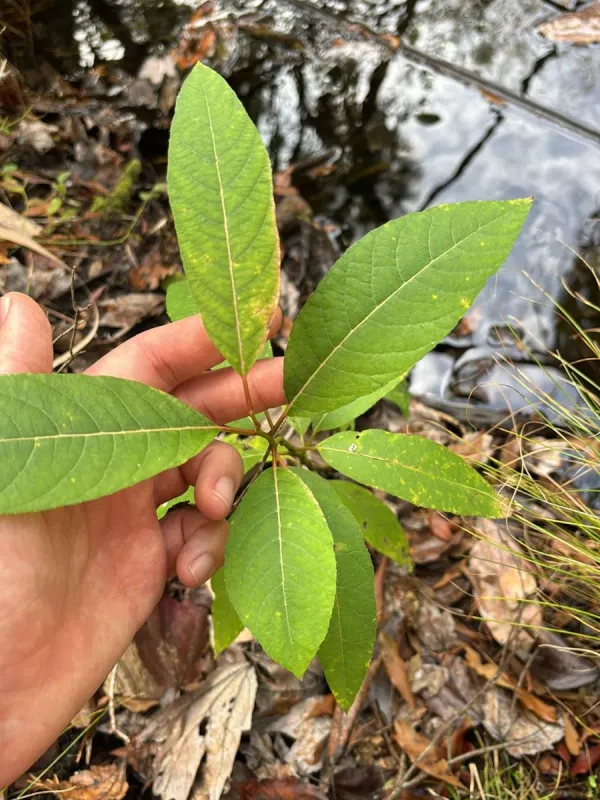
Description
Growing requirements
Florida willow (Salix floridana) is a unique woody species belonging to the Salicaceae family. Endemic to limited regions in Florida, this plant thrives in wetland habitats, typically bordering streams or occupying low-lying areas where hydrological conditions remain stable throughout the growing season.
The cultural requirements for this species focus heavily on moisture availability. Florida willow performs best in moisture-retentive soils that do not suffer from prolonged drought. It is highly valued for its ability to stabilize damp ground and withstand saturated conditions that would hinder the growth of many other common crops.
Climatically, the species is adapted to warm, humid environments. It exhibits a limited tolerance for frost and freezing temperatures, which dictates its geographical distribution in agricultural production. Ensuring adequate solar exposure is essential for maximizing biomass production and maintaining healthy physiological functions.
Agrotechnical practices involve standardized propagation through hardwood cuttings. Plantations should be designed with sufficient spacing to allow for proper light penetration and airflow, which is critical for preventing the development of common willow diseases in denser configurations.
The primary agricultural applications for Florida willow include riparian buffer zone management, erosion control on riverbanks, and potential biomass production. Its capacity for rapid growth in suitable zones makes it a sustainable choice for land restoration and biodiversity enhancement projects.
Main diseases and pests
The main disease threats for Florida willow involve fungal pathogens such as rusts and leaf spot diseases, which can flourish if the foliage remains wet for extended periods in stagnant air. Proper site selection and canopy management are primary strategies for disease prevention in this species.
Pest management focuses on mitigating damages from leaf-feeding insects and boring beetles. Integrated pest management (IPM) practices, including monitoring and localized biological or chemical controls, are recommended to protect the vigor of the plantation and ensure uniform plant growth.