
Eastwood willow
Salix eastwoodiae
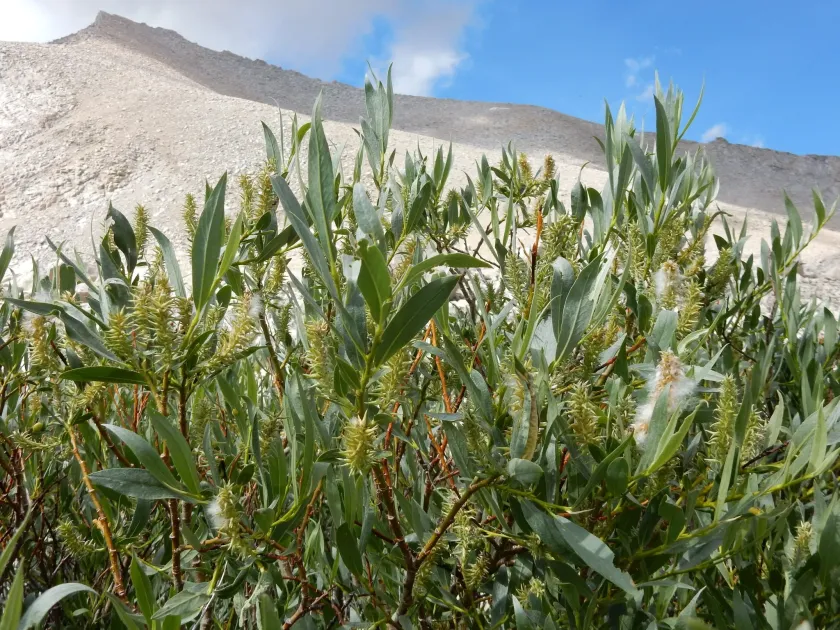
Description
Growing requirements
The Eastwood willow (Salix eastwoodiae) belongs to the Salicaceae family. It is a perennial shrub native to the subalpine and alpine regions of Western North America, primarily inhabiting wet meadows and riparian zones.
This species is highly adapted to high-moisture environments and requires consistent water availability for optimal growth. It thrives in cool climates, showing remarkable resilience to sub-zero temperatures typical of high-altitude ecosystems.
Botanically, it is recognized by its dense growth habit and pubescent leaves, which act as a natural mechanism to tolerate harsh environmental conditions. The plant rarely reaches the stature of a large tree, remaining within the shrub category.
Regarding cultivation requirements, the species performs best in moist, nutrient-rich soils with a slightly acidic to neutral pH. Proper soil drainage is essential, despite the plant's preference for wet areas, to prevent root rot.
In terms of agricultural and ecological use, Salix eastwoodiae is invaluable for erosion control along watercourses. Its extensive root network stabilizes banks, making it a critical choice for phytoremediation and environmental restoration projects.
Main diseases and pests
Common diseases affecting this shrub include fungal rusts and leaf spots, which are often exacerbated by poor air circulation and excessive humidity levels during the peak growing season.
Pest pressure is frequently driven by aphids and leaf-eating beetles. These pests can impair the plant's aesthetic and vegetative health, necessitating periodic monitoring and intervention.
Integrated pest management strategies are recommended, focusing on maintaining plant vigor through appropriate pruning and site selection to limit the environment favorable for pest colonization.
Chemical control via selective insecticides may be required in severe infestations, while cultural practices such as clearing debris help in reducing the overwintering sites for various pathogens.
Overall plant health is highly dependent on timely irrigation management and early detection of localized disease outbreaks to prevent systemic spread across the plot.