
Dovyalis zeyheri
Dovyalis zeyheri
Description
Sowing dates
Dovyalis zeyheri belongs to the Salicaceae family. Propagation of the culture is most commonly performed via seeds, which are sown in a protected environment at a stable temperature of 20–25 degrees Celsius.
For successful seed germination, it is recommended to use a lightweight, well-draining substrate with a neutral pH level. Seeds should be sown at a depth of no more than 1–2 cm.
Seedlings are pricked out after the emergence of the first pair of true leaves, moving young plants into individual containers to strengthen their root systems before transplanting into the open field.
In addition to the seed method, vegetative propagation through cuttings is possible, which allows for the preservation of the mother plant's specific varietal characteristics and accelerates the time to the first harvest.
Transplanting to a permanent location is carried out when the risk of spring frost has completely passed, ensuring sufficient spacing between rows for the development of a strong, healthy canopy.
Growing requirements
The plant prefers sunny locations protected from strong winds, as it is naturally found in the open savannah environments of its native range.
The crop is relatively drought-tolerant; however, to achieve a commercial yield, regular irrigation is required during periods of active growth and flowering, especially in hot climates.
Soils must be rich in organic matter and possess excellent permeability. Dovyalis does not tolerate waterlogging, so on heavy clay soils, it is necessary to install a drainage layer.
The optimal temperature range for active plant development is between 22 and 30 degrees Celsius, although mature specimens can withstand short-term temperature drops.
Regular crown pruning is an essential element of maintenance, as the plant is prone to dense growth, which hinders aeration and complicates fruit harvesting.
Yield
The yield of Dovyalis zeyheri directly depends on lighting conditions and the quality of cross-pollination; therefore, planting multiple specimens is recommended to ensure high fruit set rates.
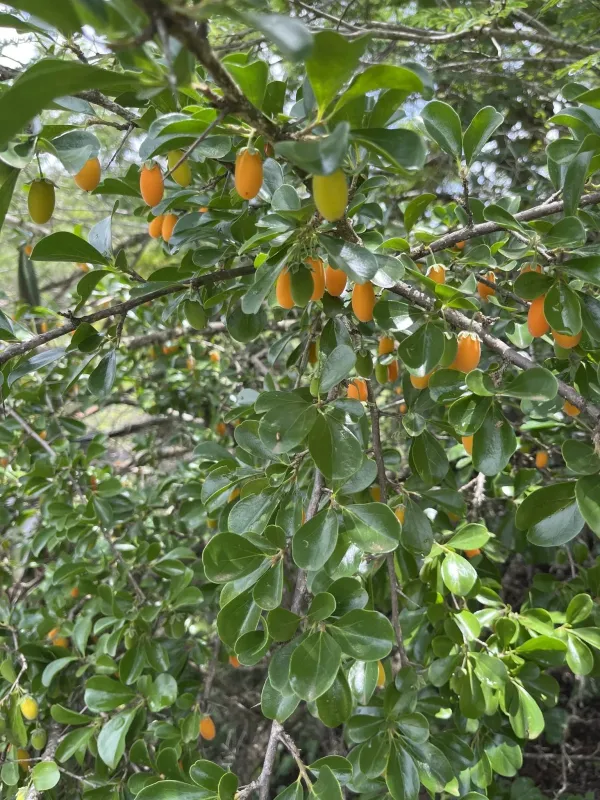
The fruits are succulent yellow-orange berries, prized for their specific sweet-and-sour flavor and widely used in the food industry for producing jams, jellies, and sauces.
When all agronomic standards are met, a mature plant is capable of providing a stable harvest for 15–20 years, with productivity increasing as the bush matures.
Fruit harvesting is performed selectively as they reach full maturity, as they possess thin skins and require careful handling during transport and storage.
The fruits contain significant amounts of vitamins and antioxidants, making them a promising niche crop for markets focused on organic and exotic food products.
Main diseases and pests
Major pests include scale insects and spider mites, which may attack young foliage and shoots under conditions of dry, hot air and insufficient humidity.
Root rot can become a serious problem with excessive soil moisture, so managing irrigation is the primary prevention method against fungal diseases.
To combat insect pests, it is recommended to use biological insecticides or perform periodic treatments with soap solutions during the early morning hours.
Powdery mildew may affect the plant when there is poor air circulation within the canopy, which is managed through timely thinning pruning and the application of specialized fungicides.
It is important to monitor the sanitary condition of the root zones, regularly removing weeds and fallen leaves to minimize the risk of pathogen accumulation.
Harvesting
Harvesting begins when the fruit skin turns a rich orange hue and feels soft to the touch, indicating it has reached optimal consumer maturity.
Using pruning shears during harvesting helps prevent mechanical damage to the branches, which are often covered in sharp thorns characteristic of this biological species.
The harvested crop should be stored in a cool place with good ventilation, as the fruits are prone to rapid fermentation due to their high sugar and moisture content.
For long-distance transportation, it is recommended to use rigid packaging with soft padding to maintain the integrity of the delicate fruit skin until the point of sale.
After the main harvest, plants require fertilization with phosphorus and potassium-based fertilizers to restore vitality and ensure successful preparation for the winter dormant period.