
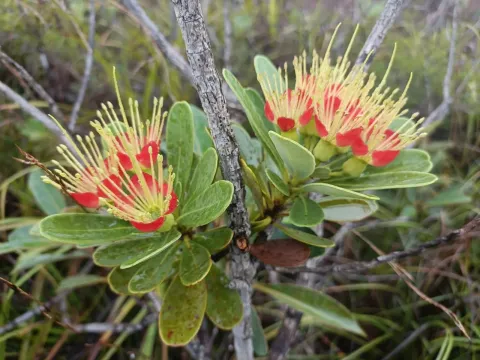
Orange Xanthostemon
Xanthostemon aurantiacus
The Orange Xanthostemon (Xanthostemon aurantiacus) is a member of the Myrtaceae family. Native to the lush environments of New Caledonia, it serves as an ornamental species prized for its vibrant floral displays.
What the section contains
Orange Xanthostemon
This species thrives in tropical climates where temperatures remain consistently warm throughout the year. It does not tolerate frost or cold winds, which makes its cultivation limited to specific frost-free zones or controlled greenhouse environments.
Ideal soil conditions for this plant include well-draining, nutrient-rich substrates with a slightly acidic profile. Proper drainage is the most critical factor, as stagnant water can rapidly damage the root structure.
Orange Xanthostemon is highly photophilous and requires full sun to partial shade for optimal development. Exposure to sufficient sunlight is essential to ensure the plant maintains its structural integrity and flowers regularly.
Agronomic management requires consistent irrigation, ensuring the root zone stays moist but not waterlogged. Periodic fertilization with micronutrient-balanced compounds helps support the plant's robust growth cycles.
Common health issues in Xanthostemon aurantiacus are primarily related to fungal pathogens, such as Phytophthora root rot, which typically occur in poorly drained soil or areas with excessive humidity.
Pest management is equally vital, as scale insects and spider mites are known to infest the dense foliage. These pests can cause significant damage by depleting the plant's nutrient reserves, leading to chlorosis and stunted growth.
Integrated pest management strategies, such as physical removal of pests, pruning infested branches, and applying targeted organic oils, are recommended to maintain plant health without damaging the ecosystem.
Maintaining adequate spacing between individual trees facilitates airflow, which acts as a natural deterrent against the rapid spread of fungal spores and prevents humid pockets where pests thrive.
In cases of severe infestation or systemic disease, professional assessment of the soil's moisture content and the application of appropriate systemic fungicides may be necessary to save the specimen.