
Prickly paperbark
Melaleuca styphelioides
Description
Growing requirements
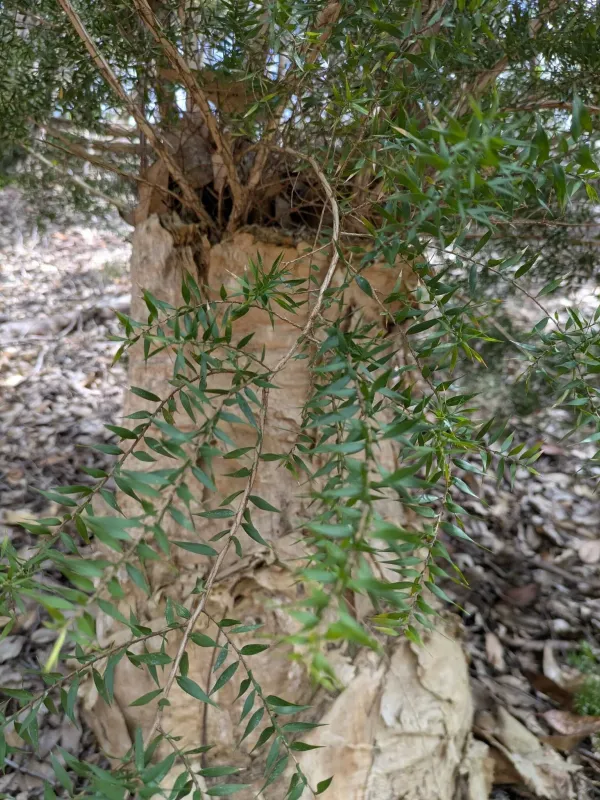
The Prickly paperbark (Melaleuca styphelioides) is a prominent species within the Myrtaceae family, native to the coastal regions of New South Wales and Queensland, Australia. This evergreen tree is highly valued for its striking, flaky bark and dense, needle-like foliage.
In terms of habitat requirements, the species naturally thrives in swamps, along watercourses, and in various coastal environments. It is renowned for its resilience, showing a significant tolerance for waterlogged soils and high salinity levels, which is a rare trait among many landscape trees.
Cultivation of Melaleuca styphelioides requires full sun to partial shade for optimal health and vigor. While it adapts well to different soil textures, including sand and heavy clay, ensuring moderate organic matter content helps promote a more robust root system.
The agronomic maintenance of this plant is relatively straightforward. Once established, the tree is drought-tolerant, but regular irrigation during its juvenile stage significantly improves survival rates and growth speed. Periodic pruning is recommended to maintain the desired shape and density.
Its primary use is in landscape design and environmental rehabilitation. Due to its hardiness and aesthetic appeal, it is extensively used in mass plantings, as a windbreak, and as a focal point in coastal gardens. It also provides essential habitat for local bird species.
Main diseases and pests
Prickly paperbark is generally robust, but it can be susceptible to scale insects and mealybugs. These pests typically cluster on tender shoots and leaf undersides, potentially weakening the plant if infestations become severe and remain untreated by systemic insecticides.
Root rot, particularly caused by Phytophthora species, represents a major threat in poorly drained or water-saturated soils. Although the tree is adapted to swamps, static water combined with pathogen presence can compromise the root integrity and lead to foliage yellowing.
Prevention of fungal diseases relies heavily on proper soil management. Ensuring adequate drainage in garden beds or containers is the best defense against soil-borne pathogens. Avoid over-mulching directly against the tree trunk, as this can trap moisture and encourage decay.
Sooty mold may occasionally appear as a secondary issue following aphid or scale infestations. While the mold itself is not directly parasitic on the tree, it covers the leaves and interferes with photosynthesis, necessitating the removal of the underlying pest population.
Integrated pest management (IPM) practices, including the preservation of beneficial insects and regular monitoring, are sufficient to maintain the tree's health. In commercial nursery settings, spacing plants to allow for airflow is essential to prevent common fungal leaf spots.