
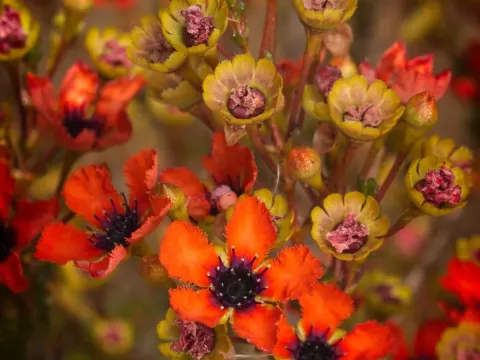
Pileanthus
Pileanthus
Pileanthus is a genus of shrubs belonging to the Myrtaceae family, native to the sandy regions of Western Australia. These evergreen plants are adapted to harsh, low-nutrient environments and require specific conditions to thrive in cultivation.
What the section contains

Pileanthus
The plant demands full sunlight to maintain its structural integrity and encourage prolific flowering. Placing it in shade leads to etiolation and a significant decrease in the number of flowers produced during the season.
Soil requirements are strict, focusing on excellent drainage. A sandy, well-aerated substrate with a slightly acidic to neutral pH is essential to prevent water accumulation near the root system, which is fatal for the plant.
Watering should be carefully managed to allow the soil to dry out between applications. Overwatering is the most common cause of failure, as it promotes root decay and makes the plant susceptible to soil-borne pathogens.
Climatic preferences include temperate conditions with low atmospheric humidity. While the plant can tolerate short periods of heat, it struggles in humid, damp climates where fungal growth is promoted by moisture on the foliage.
Root rot, caused by excessive soil moisture and poor drainage, is the primary threat to Pileanthus. Once established, it is extremely difficult to treat, making prevention through soil management the only effective strategy.
Spider mites are a common pest in hot and dry conditions, often infesting the undersides of leaves. Regular inspections and the maintenance of adequate airflow around the plant can help manage mite populations.
Powdery mildew can manifest when there is poor ventilation or high humidity levels. Utilizing fungicides and ensuring proper spacing between individual shrubs are vital steps in maintaining plant health.
Scale insects may attach to stems and foliage, extracting sap and weakening the overall vigor of the shrub. Manual removal or the application of horticultural oils is recommended for minor infestations.
Nematodes, which inhabit the soil, can be a latent threat in light, sandy environments. Incorporating organic matter correctly and avoiding monocultures can help maintain a more balanced soil ecosystem.