
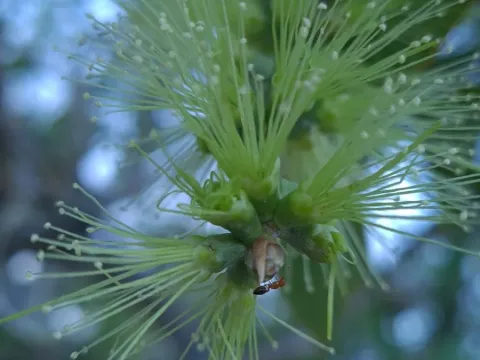
Niaouli
Melaleuca viridiflora
Niaouli (Melaleuca viridiflora) is a prominent member of the Myrtaceae family. Native to tropical regions of Australia, New Guinea, and the Pacific islands, this evergreen tree is widely recognized for its medicinal bark and fragrant foliage.
What the section contains
Niaouli
The crop thrives in tropical climates characterized by high humidity and consistent temperatures. It does not tolerate frost, which makes its commercial cultivation restricted to tropical zones or specialized greenhouse environments.
Regarding soil, Niaouli is quite versatile but prefers moist, well-draining soils. It is well-adapted to acidic conditions and can withstand waterlogged sites that would be unsuitable for many other agricultural species.
Adequate sunlight is essential for the tree's development. Full sun exposure ensures that the foliage produces high yields of essential oils, which are the primary economic focus of commercial plantations.
Agronomic management involves strategic irrigation and soil nutrient maintenance. Planting density must be optimized to ensure proper airflow through the canopy, preventing the build-up of excess humidity around the leaves.
Harvesting of Niaouli is primarily centered on the collection of leaves and terminal branches, which are processed via steam distillation to extract the volatile essential oil known as Niaouli oil.
The timing of the harvest is crucial to maximize the concentration of cineole and other active components. Harvesting is typically conducted in cycles, allowing the tree time to regenerate its canopy between cuts.
Pruning is often integrated into the harvesting process. By systematically trimming the branches, farmers encourage bushier growth, which increases the total amount of biomass produced per tree in subsequent seasons.
Equipment used for harvesting should be clean to prevent the transmission of pathogens between trees. Post-harvest, the raw material should be processed as soon as possible to minimize the loss of aromatic compounds.
Efficient harvesting techniques are essential for maintaining the long-term sustainability of the plantation and ensuring a consistent supply of high-quality essential oil for the medical and cosmetic industries.
Niaouli trees are generally resilient, but they are susceptible to root rot if the soil structure becomes too compact or if irrigation management fails to provide adequate drainage in waterlogged soils.
Fungal leaf spot diseases may appear during periods of excessive rainfall or prolonged high humidity. These infections can reduce the quality of the foliage, directly impacting the final oil yield.
Scale insects and mealybugs are the most significant pests for Niaouli. They feed on the sap of young stems and leaves, which can stunt tree growth and serve as a vector for secondary infections.
Defoliating insects can occasionally infest plantations, causing damage to the new growth. Farmers must monitor the canopy health regularly to detect and manage these pest populations early.
Integrated Pest Management (IPM) strategies, including encouraging natural predators and maintaining tree vigor, are the most effective ways to mitigate the impact of pests and diseases on Niaouli crops.