
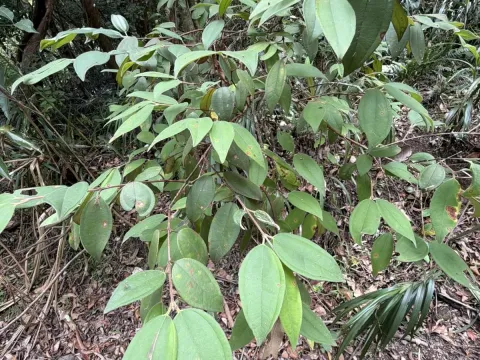
Rhodamnia
Rhodamnia
Rhodamnia is a genus of evergreen trees and shrubs belonging to the Myrtaceae family. These plants are primarily native to the tropical and subtropical regions of Southeast Asia, Oceania, and Australia, thriving in diverse forest ecosystems.
What the section contains
 Rhodamnia acuminata
Rhodamnia arenaria
Rhodamnia arenaria
Rhodamnia acuminata
Rhodamnia acuminata
Rhodamnia arenaria
Rhodamnia arenaria
 Rhodamnia australis
Rhodamnia blairiana
Rhodamnia blairiana
Rhodamnia australis
Rhodamnia australis
Rhodamnia blairiana
Rhodamnia blairiana
 Rhodamnia cinerea
Rhodamnia costata
Rhodamnia costata
Rhodamnia cinerea
Rhodamnia cinerea
Rhodamnia costata
Rhodamnia costata
 Rhodamnia dumicola
Rhodamnia glauca
Rhodamnia glauca
Rhodamnia longisepala
Rhodamnia longisepala
Rhodamnia dumicola
Rhodamnia dumicola
Rhodamnia glauca
Rhodamnia glauca
Rhodamnia longisepala
Rhodamnia longisepala
 Rhodamnia maideniana
Rhodamnia maideniana
Rhodamnia maideniana
 Rhodamnia pauciovulata
Rhodamnia pauciovulata
Rhodamnia pauciovulata
 Rhodamnia sessiliflora
Rhodamnia whiteana
Rhodamnia whiteana
Rhodamnia sessiliflora
Rhodamnia sessiliflora
Rhodamnia whiteana
Rhodamnia whiteana
 Scrub Turpentine
Rhodamnia rubescens
Scrub Turpentine
Rhodamnia rubescens
 Silver Rhodamnia
Rhodamnia argentea
Smooth scrub turpentine
Rhodamnia glabrescens
Silver Rhodamnia
Rhodamnia argentea
Smooth scrub turpentine
Rhodamnia glabrescens
Rhodamnia
Successful cultivation of Rhodamnia requires a warm, humid environment with consistent moisture throughout the year. The plants perform best in well-drained, nutrient-rich soils with a slightly acidic to neutral pH level, which ensures optimal nutrient uptake.
Botanically, the genus is characterized by opposite leaves with distinct triplinerved venation (three prominent longitudinal veins). The inflorescences are usually white or pale, producing small berries that are often edible or used in traditional local preparations.
Agrotechnical management involves establishing a protective barrier against extreme temperatures and heavy winds during the early stages of plant growth. Regular irrigation is necessary, though water management is critical to prevent root suffocation in heavy soils.
In terms of economic use, Rhodamnia species are valued for their durable wood, which has been historically used for small-scale timber production. Additionally, some species are utilized in ornamental gardening and permaculture systems within their native climatic zones.
The primary threats to Rhodamnia health include root rot diseases, which often stem from poor soil drainage or high humidity levels coupled with stagnant water. These pathogens can rapidly affect the plant's vascular system if left unmanaged.
Pests such as scale insects, aphids, and mites are common challenges, especially in young plantations or greenhouses. Integrated pest management, focusing on sanitation and maintaining proper air circulation, is the most effective approach for ensuring plant longevity.