
Rusty Tristania
Tristaniopsis ferruginea
Description
Growing requirements
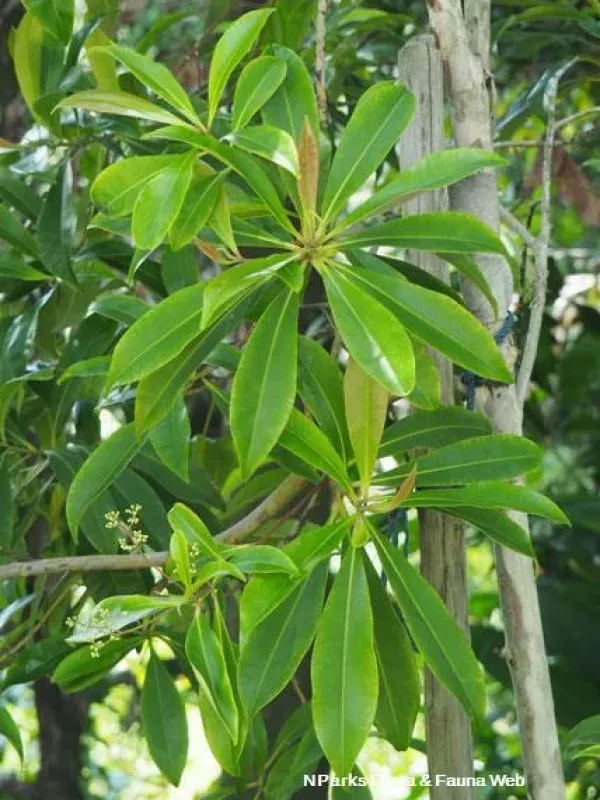
Rusty Tristania (Tristaniopsis ferruginea) is a perennial woody plant belonging to the Myrtaceae family. It is widely recognized for its botanical characteristics, particularly its smooth, exfoliating bark and dense, leathery foliage that provides significant ornamental value.
The native distribution of this species spans across the tropical regions of Southeast Asia. It typically thrives in lowland forests and near watercourses, where it benefits from the humid microclimate and the nutrient-rich soils characteristic of these equatorial regions.
Regarding climatic requirements, this plant is strictly tropical and thrives in environments with consistent temperatures and high rainfall. It does not possess cold tolerance, making it unsuitable for cultivation in temperate zones without strict greenhouse climate control.
Soil management for Tristaniopsis ferruginea focuses on maintaining high organic content and excellent drainage. While the tree is adapted to moist conditions, it cannot survive in waterlogged soil for extended periods, as this can trigger root rot and other physiological stressors.
Economically, the species is utilized both for its durable timber in local construction and as a popular selection for landscape architecture. Its ability to grow into a substantial shade tree makes it a valuable asset for large-scale tropical landscaping and reforestation initiatives.