
Scrub Turpentine
Rhodamnia rubescens
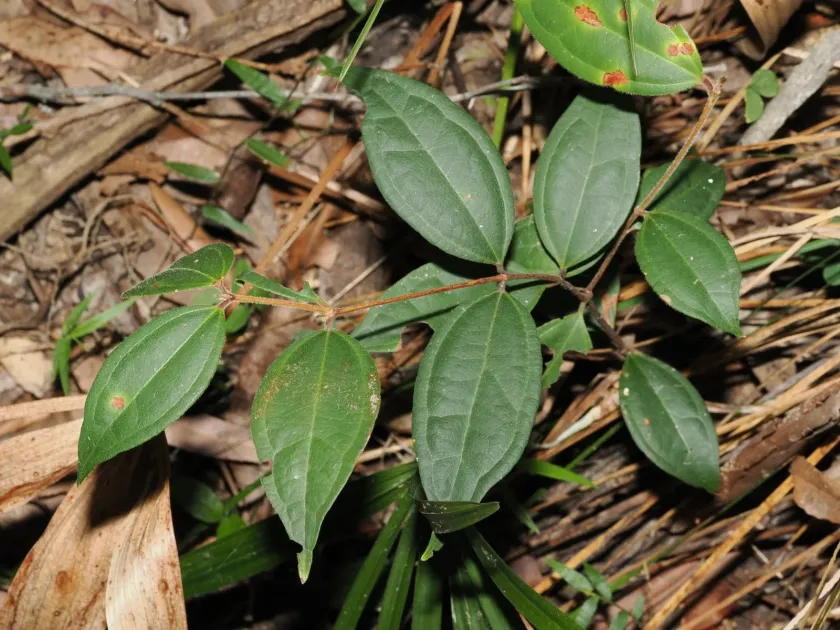
Description
Growing requirements
Rhodamnia rubescens, commonly known as Scrub Turpentine, belongs to the Myrtaceae family and is native to the coastal regions of eastern Australia.
The species thrives in warm, humid subtropical climates and requires protection from frost, as it is highly sensitive to temperature drops.
Cultivation success depends on well-drained, nutrient-rich soil that provides enough aeration to prevent root rot in wetter environmental conditions.
While the tree can tolerate partial shade, it performs best when exposed to filtered sunlight during its early developmental stages.
Maintaining consistent soil moisture is essential for the healthy growth of the canopy and the overall vigor of the tree throughout the growing season.
Main diseases and pests
The most significant threat to Rhodamnia rubescens is the invasive myrtle rust (Austropuccinia psidii), which causes severe damage to leaves and stems.
This fungal pathogen spreads rapidly via spores and can devastate entire plantations if biosecurity measures are not strictly enforced.
Various foliage-feeding insects, such as caterpillars and beetles, may occasionally cause localized damage, although these are secondary to fungal issues.
Effective management includes the use of resistant stock where available and the immediate removal of infected plant material to minimize spore dispersal.
Regular inspection of the orchard or nursery is critical to detect early signs of rust infections and apply necessary treatment strategies promptly.