
Rhodamnia australis
Rhodamnia australis
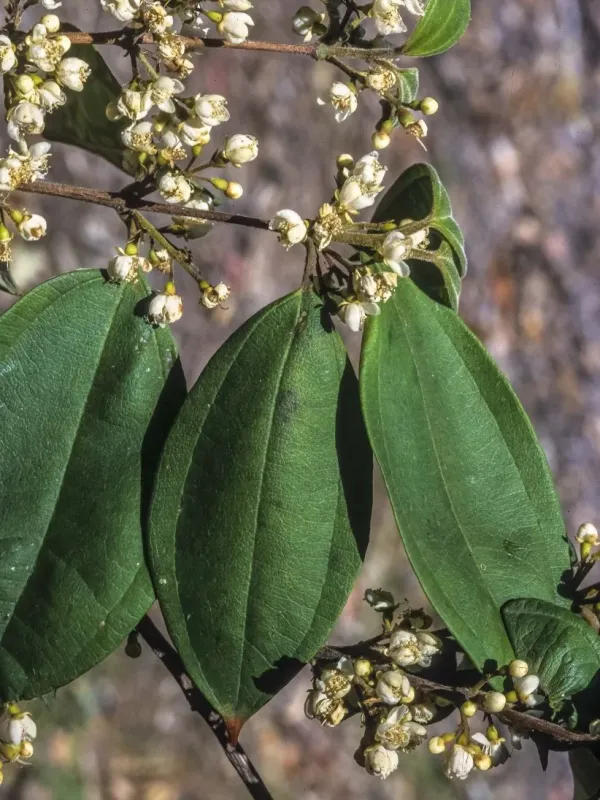
Description
Growing requirements
Rhodamnia australis is a species of flowering plant within the Myrtaceae family, native to the tropical and subtropical regions of Australia. As a member of this family, it exhibits characteristic evergreen foliage and specific floral structures common to Myrtaceae.
The plant thrives in warm climates and lacks cold hardiness, making it suitable only for regions without significant frost events. It requires a stable environment to maintain its metabolic activities throughout the year.
Optimal growth conditions necessitate well-drained, nutrient-rich soils. The plant is particularly sensitive to waterlogging, which often triggers root rot, thus requiring site selection with excellent permeability or artificial drainage structures.
Cultivation practices involve consistent irrigation during dry spells to simulate the humid conditions of its native rainforest habitat. High humidity is essential for the healthy development of foliage and successful fruit set.
From a horticultural perspective, Rhodamnia australis is valued for its potential in niche fruit production and its aesthetic contribution to landscape design. Its wood density and growth habit make it a subject of interest for local forestry and conservation efforts.
Main diseases and pests
Fungal pathogens represent the most significant threat to the health of the plant, particularly in humid or stagnant air environments where airflow is restricted.
Common insect pests include scale insects and mealybugs, which are known to colonize the stems and undersides of leaves, causing gradual decline and weakening of the specimen.
Leaf spots caused by various fungi can severely affect photosynthetic efficiency, necessitating a rigorous schedule of integrated pest management and sanitation practices.
Root system vulnerability to soil-borne pathogens is high, especially if soil temperature and moisture levels are not strictly managed through proper mulching and irrigation control.
Regular inspection is critical for early detection of pest infestations, allowing for mechanical or biological intervention before the outbreak reaches an economic injury level.