
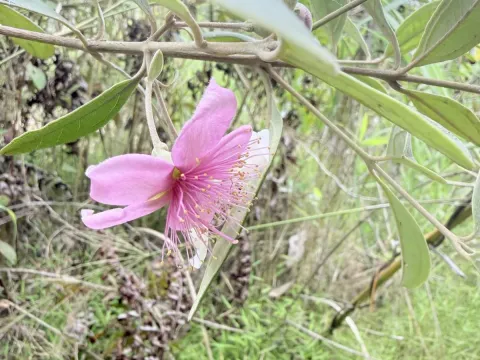
Rhodomyrtus
Rhodomyrtus
Rhodomyrtus is a genus of flowering plants in the Myrtaceae family, native to tropical and subtropical regions across Asia, Australia, and the Pacific Islands. These plants are typically evergreen shrubs or small trees that thrive in warm environments.
What the section contains


Rhodomyrtus
Climatic requirements are specific, as Rhodomyrtus requires consistent warmth throughout the year. They are highly susceptible to frost and should be grown in greenhouses if the local climate drops below 10-12 degrees Celsius.
The soil must be fertile, well-draining, and slightly acidic to neutral. High organic content in the substrate supports vigorous growth and fruit production, while poor drainage can lead to rapid root decay.
Regarding light, full sunlight is preferred for mature plants to ensure optimal flowering and fruiting. However, during the early stages of development, partial shading is recommended to protect tender leaves from scorching.
Agrotechnical practices include regular irrigation to maintain soil moisture without causing waterlogging, and periodic application of balanced fertilizers during the growing season to supplement soil nutrients.
Rhodomyrtus is susceptible to various fungal diseases, especially in high-humidity indoor conditions. Root rot and powdery mildew are the most common issues reported by growers.
Pest pressures primarily come from sap-sucking insects, including scale insects, mealybugs, and spider mites. These pests thrive in warm, stagnant air and can significantly stunt plant growth.
Management strategies involve rigorous sanitation practices, such as removing infested foliage and ensuring adequate ventilation to lower relative humidity around the canopy.
Chemical control with systemic insecticides or acaricides is often necessary in commercial production to manage infestations that exceed economic thresholds.
Integrating biological control agents can be effective for managing pest populations while minimizing the use of synthetic chemical applications in fruit-producing greenhouses.
The economic value of Rhodomyrtus lies primarily in its edible fruits, which are consumed fresh or processed into jams, jellies, and desserts. Some species possess significant medicinal properties.
Harvesting is labor-intensive and performed by hand when the fruits reach full maturity, indicated by a deep, uniform color and a soft texture.
Post-harvest handling is critical because the fruits have a short shelf life. Rapid cooling and careful packaging are required to preserve quality for market distribution.
Apart from culinary use, the plant is valued for its essential oils. These oils are extracted for use in aromatherapy, cosmetics, and traditional medicinal applications.
Crop rotation and consistent monitoring of fruit maturity stages are essential for maximizing yields and ensuring the production of high-quality agricultural goods.