
Salt paperbark
Melaleuca cuticularis
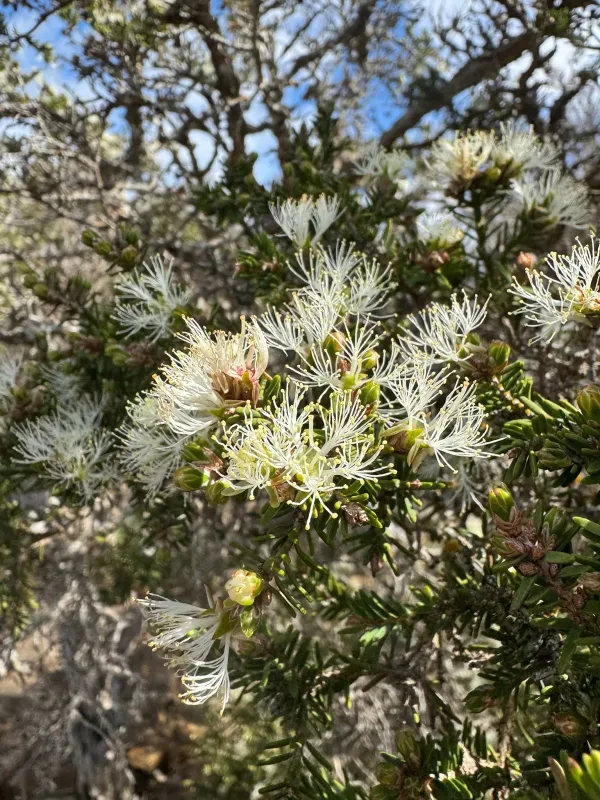
Description
Growing requirements
Melaleuca cuticularis, commonly known as the salt paperbark, is a resilient species belonging to the Myrtaceae family. It is native to the southern coastal regions of Western Australia, where it thrives in harsh conditions.
This tree is highly specialized for wetlands and saline environments. It is a key agricultural species for land reclamation projects due to its remarkable tolerance for high soil salinity and periodic waterlogging.
For optimal growth, Melaleuca cuticularis requires full sun exposure. It performs best in open areas where it can receive maximum daily solar radiation to support its dense, fibrous bark development.
The species is highly adaptable to various soil types, ranging from heavy clays to sandy loams. However, it exhibits a preference for moist conditions and is frequently found growing naturally in brackish swamps.
In terms of climate, the salt paperbark prefers Mediterranean to subtropical zones. It can withstand mild frost but requires protection from severe temperature drops to maintain its vitality during the establishment phase.
Main diseases and pests
The salt paperbark is naturally equipped with pest-resistant properties. Its foliage is rich in essential oils, which act as a defensive barrier against a wide spectrum of insect herbivores and pathogens.
Root rot remains the most significant threat if drainage is not managed correctly in controlled cultivation environments. Proper soil aeration is essential to prevent the accumulation of moisture-loving fungi.
Spider mites are the most common pests, particularly when the trees are grown in greenhouses or in excessively dry, arid conditions. Increasing local humidity and improving air circulation are effective control methods.
Scale insects may occasionally colonize the branches, especially if the tree is under stress from drought or nutrient deficiency. Regular monitoring and mechanical removal are often sufficient to manage these infestations.
Good agricultural hygiene practices, such as removing fallen leaf litter and pruning damaged limbs, are essential to reduce the inoculum of pathogens in the orchard or nursery setting.