
Agathis dammara
Agathis dammara
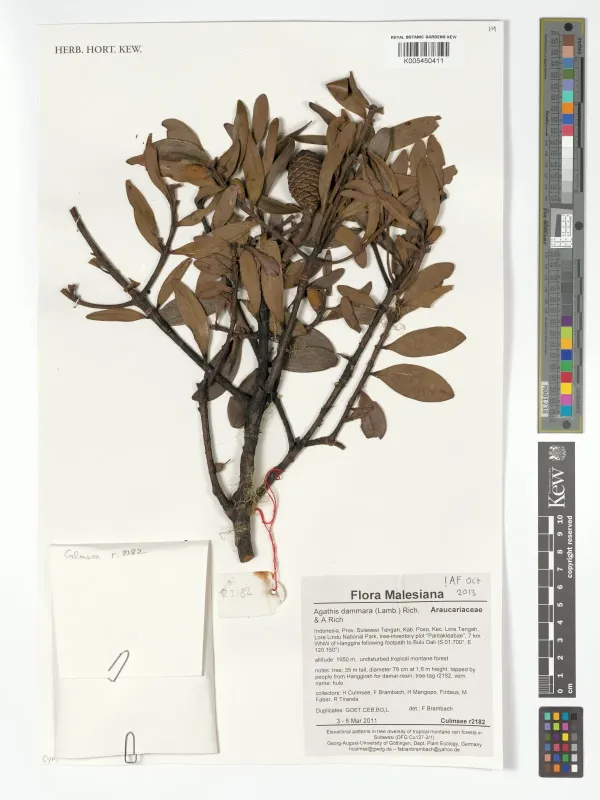
Description
Growing requirements
Agathis dammara, commonly referred to as the East Indian kauri, is a magnificent evergreen conifer belonging to the Araucariaceae family. This species is native to the tropical forests of the Malay Archipelago and thrives in humid environments.
The tree requires a tropical climate with consistent high humidity and warm temperatures throughout the year. It performs best in deep, well-drained, nutrient-rich soils that support its extensive root system while preventing waterlogging, which the plant does not tolerate.
When selecting a site for cultivation, it is essential to ensure adequate space for the tree to reach its full potential height. While adult trees are sun-loving, young saplings require partial shade to protect them from excessive heat and direct sunlight during their establishment phase.
Agronomic maintenance includes regular soil moisture management and the application of fertilizers that promote steady growth. Due to the tree's slow maturation, growers must focus on long-term plantation management to ensure sustainable development of the forest canopy.
In temperate zones, cultivation is limited to controlled environments such as large botanical conservatories or heated greenhouses. Providing optimal ventilation and avoiding sudden temperature drops are critical factors for successful long-term care of this species.
Harvesting
The primary economic output of Agathis dammara is the resin known as dammar, which is harvested from the trunk. The process involves careful tapping, which requires precise technique to maximize yield while preserving the long-term health and vitality of the tree.
The collected resin is a prized material in the varnish and printing ink industries, favored for its clarity, gloss, and non-yellowing properties. It remains a staple ingredient for high-quality restoration projects and fine art protective coatings.
The timber harvested from Agathis dammara is highly regarded for its excellent mechanical properties, including high strength-to-weight ratio and ease of machining. It is commonly used in boat building, high-end furniture manufacturing, and musical instrument making.
Harvesting strategies are aligned with sustainable forestry practices, ensuring that timber removal does not exceed the natural regeneration rate of the forest. This systematic approach preserves biodiversity while maintaining a steady supply of high-grade wood products.
Processing involves refining the raw resin to remove debris and classifying it based on color and purity grades. This classification ensures that end-users receive products suited for their specific industrial applications, ranging from paints to advanced adhesives.