
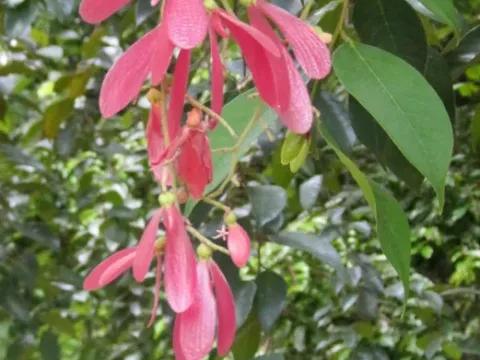
Shorea acuminata
Shorea acuminata
Shorea acuminata is a large, evergreen tree species belonging to the Dipterocarpaceae family. It is a vital component of the lowland dipterocarp forests across the Malay Peninsula and Sumatra, known for its significant height and commercial value.
What the section contains
Shorea acuminata
The species thrives in a strictly tropical climate characterized by high humidity, abundant rainfall, and a consistent temperature range throughout the year. It does not tolerate prolonged dry spells, making its geographic distribution quite specific to equatorial zones.
Soil requirements involve well-drained, deep alluvial or clay-loam soils rich in organic matter. While the tree appreciates moisture, it is sensitive to waterlogging, as proper root aeration is essential for preventing decay and promoting deep taproot development.
Botanically, Shorea acuminata is characterized by a straight, cylindrical bole and a spreading crown that contributes to the forest canopy. The leaves are distinctive, being oblong to lanceolate with a notably acuminate tip, providing the basis for its scientific name.
In silvicultural practice, young trees require a shaded environment to protect them from excessive light and heat. As they mature, they become emergent trees, competing for light at the top level of the canopy, which dictates the layout of forest plantation management.
The primary economic focus of Shorea acuminata is the production of commercial timber, marketed under the "light red meranti" trade name. This wood is highly valued for its uniform texture, moderate density, and suitability for various structural applications.
Timber is utilized extensively in furniture manufacturing, cabinetry, interior joinery, and construction framing. Its relative ease of working with machine tools makes it a preferred choice for high-quality woodwork throughout the global furniture industry.
Yield estimation is determined by long-term forestry cycles, often spanning several decades. Sustainable management practices emphasize maximizing the annual increment of high-quality wood while ensuring that harvest rates do not exceed the natural regeneration capacity of the forest.
Beyond timber, the species contributes significantly to the ecosystem services of its native range. These include carbon sequestration and the maintenance of soil integrity, which are increasingly critical in contemporary environmental impact assessments.
Modern forest management seeks to improve yield through selective breeding and enrichment planting. These methods ensure that the productivity of managed stands is maintained while preserving the integrity of the broader forest ecosystem.
Fungal pathogens represent the most significant threat to the health of Shorea acuminata, particularly root rot and stem canker. These infections often proliferate in disturbed forest areas where soil drainage is compromised or where trees have been mechanically damaged.
Various wood-boring insects, such as Scolytinae and Platypodinae beetles, can cause severe degradation to timber quality. These pests typically infest stressed, over-mature, or damaged trees, making regular sanitary monitoring an essential part of plantation maintenance.
Deforestation and habitat fragmentation are the most pressing threats to the species' long-term survival in the wild. The conversion of forest land into agricultural zones severely impacts the genetic reservoir of the species and disrupts natural pollination cycles.
Climatic instability, including irregular rainfall patterns, places physiological stress on trees, rendering them more susceptible to disease outbreaks. A weakened immune system makes it difficult for trees to recover from even minor pathogen attacks or environmental stressors.
Protection strategies focus on ecosystem-based management and strict forest regulation. Implementing integrated pest management (IPM) and minimizing human-caused damage to tree stands are crucial steps in ensuring the resilience of this valuable species against modern threats.