
Shorea acuminatissima
Shorea acuminatissima
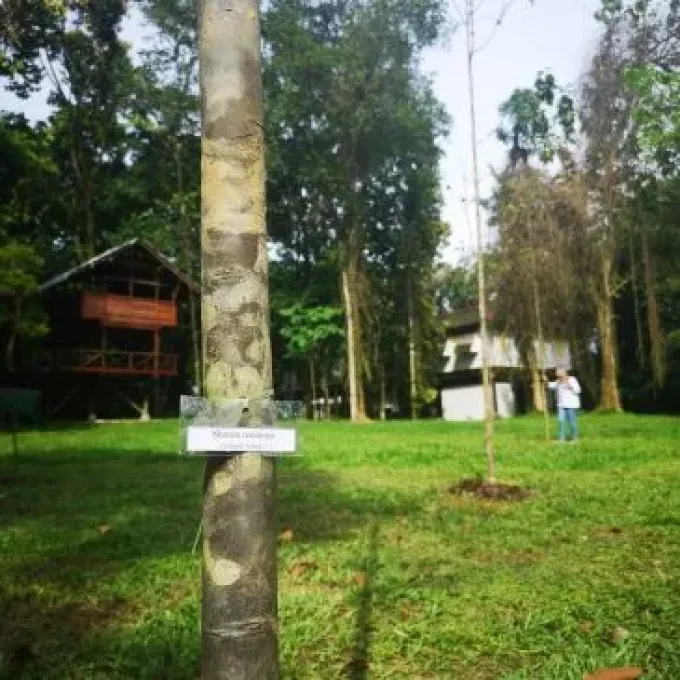
Description
Growing requirements
Shorea acuminatissima is a majestic evergreen tree belonging to the family Dipterocarpaceae. It stands as a prominent canopy tree in tropical forests, often reaching heights exceeding 50 meters, and serves as a vital component of the Bornean ecosystem.
The native range of this species is concentrated on the island of Borneo. It thrives primarily in lowland and hill dipterocarp forests, often selecting well-drained alluvial soils that provide the necessary nutrients for long-term growth.
Climate requirements for this species include high, stable temperatures throughout the year and high levels of annual precipitation. It relies on the tropical environment to maintain consistent growth rates and prevent the stress associated with water deficits.
Soil quality is paramount for the development of healthy stands. The species favors deep, fertile, and well-draining soils that allow for an expansive root system, which is essential for stabilizing such large trees against strong tropical winds.
Forestry management practices focus on protecting natural regeneration. Because the seedlings require specific light conditions, foresters often practice selective harvesting techniques that preserve the canopy cover necessary for juvenile growth.
Yield
This species is highly valued for its timber, which is commercially categorized as "Light Red Meranti." The wood is renowned for its attractive grain, workability, and durability, making it a preferred choice for various industrial and residential applications.
The primary economic output consists of high-quality lumber used in cabinet making, interior joinery, flooring, and decorative veneer production. Its properties allow for excellent finishes, which are sought after in high-end construction markets.
Yield estimation is a long-term endeavor due to the slow growth rate of dipterocarp trees. Sustainable forest management plans are implemented to ensure that harvest volumes do not exceed the annual growth increment of the forest stand.
Beyond its timber value, the species plays a crucial role in ecological restoration efforts. Planting Shorea acuminatissima helps rebuild complex forest structures that support diverse wildlife populations in degraded landscapes.
Technological improvements in wood processing have increased the overall yield efficiency by reducing waste during the milling process. This approach maximizes the utility of harvested timber and supports the long-term economic viability of the industry.
Main diseases and pests
The most significant threat to Shorea acuminatissima populations is the increasing frequency of irregular flowering cycles, which are often exacerbated by climate variability, leading to poor seed set and impaired forest regeneration.
Root rot pathogens represent a severe biological threat to juvenile trees. In plantation settings, excessive humidity can encourage fungal growth, leading to significant mortality rates if soil drainage is not managed correctly.
Insect pests, particularly wood-boring beetles, pose a direct threat to the economic value of the wood. These pests penetrate the trunk and larvae cause extensive damage to the heartwood, reducing the quality and volume of usable timber.
Fragmentation of the forest landscape increases the vulnerability of stands to invasive species and wind damage. Exposure to harsh environmental conditions at the edges of fragmented forests often stunts growth and weakens tree health.
To combat these threats, professional foresters employ monitoring programs to detect pest outbreaks early. Integrating biological control methods and maintaining high forest diversity helps to stabilize the health of the species over time.