
Parashorea stellata
Parashorea stellata
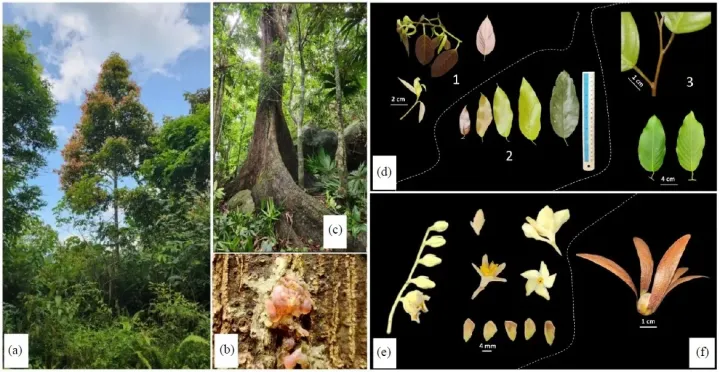
Description
Sowing dates
Parashorea stellata is a prominent member of the Dipterocarpaceae family. In forestry management, this tree is primarily propagated through seeds, as it is a natural forest species that thrives in specific tropical niches.
The seeds have a very short viability period, requiring immediate planting after collection. Successful germination depends on sowing them during the early stages of the rainy season to ensure constant moisture.
Specialized nursery substrates are required for optimal seedling development. These substrates should be rich in organic matter and possess excellent drainage capabilities to prevent seed rot.
The optimal germination temperature ranges between 25 and 30 degrees Celsius. Within 10 to 20 days, the seeds typically begin to sprout if the humidity levels are consistently maintained.
Young seedlings are sensitive to harsh sunlight and require partial shade during their early growth stages. Once they reach 30–50 cm in height, they are ready to be transplanted into their permanent site.
Growing requirements
This culture thrives in humid tropical rainforest environments with high annual rainfall. It is not adapted to regions with prolonged dry seasons, as it requires consistent water availability.
The soil requirements for Parashorea stellata include deep, fertile, and well-drained profiles. It performs best in loamy or alluvial soils with a slightly acidic to neutral pH level.
As a light-demanding species, the tree requires adequate space for its canopy to develop properly. In forest stands, managing the spacing between trees is crucial to maximize light capture.
Growth is optimal at elevations from sea level up to approximately 800 meters. The species avoids waterlogged conditions, which can lead to root system decay and poor plant vigor.
Maintaining a stable microclimate is vital for plantation success. Adequate spacing helps reduce competition for nutrients and ensures the long-term health and growth rate of the stands.
Yield
Parashorea stellata is highly valued for its timber, commonly marketed as white meranti. It represents a significant economic resource for sustainable plantation forestry in Southeast Asia.
The rotation period for commercial timber production ranges from 40 to 60 years. During the initial decades, the species exhibits rapid height growth, establishing a strong structural base.
Its timber is prized for being lightweight, strong, and easy to machine. It is extensively used for high-quality furniture, interior joinery, plywood production, and general construction.
Timber yield and quality depend on systematic silvicultural practices, such as thinning and pruning. These measures ensure the development of clean, straight boles without excessive branching.
The economic value of this tree is sustained by the high global demand for versatile, light-colored hardwood timber. Proper management strategies allow for long-term production profitability.
Main diseases and pests
Fungal pathogens pose a significant threat in nurseries, particularly when humidity is high and ventilation is inadequate. Improving airflow is a key preventive measure against seedling loss.
Various insect pests, including stem borers and foliage feeders, can impact the growth and health of the trees. Regular field monitoring is essential to detect outbreaks early.
Root rots are common in poorly drained soils, which can lead to stunted growth or tree death. Site selection based on thorough soil analysis is the most effective management strategy.
Damage from local fauna, including rodents and larger mammals, can be problematic for young saplings. Protective measures or fencing may be necessary in vulnerable plantation areas.
Climatic stressors, such as severe droughts, can weaken the trees' natural defenses, making them more susceptible to secondary infections or pest infestations. Soil moisture management is critical.