
Shorea atrinervosa
Shorea atrinervosa
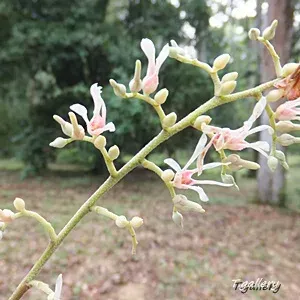
Description
Growing requirements
Shorea atrinervosa is a majestic evergreen tree belonging to the family Dipterocarpaceae. It is highly regarded in Southeast Asia for producing dense, durable, and high-quality timber known as Balau, which is essential for heavy construction.
The tree thrives in a humid tropical climate characterized by high annual rainfall and consistent, warm temperatures. It lacks frost tolerance and struggles in regions with significant dry seasons, requiring a stable environment for optimal growth.
Soil requirements are quite specific; the species prefers deep, well-drained loamy or clay soils. It is vital to avoid sites with poor drainage, as waterlogged conditions quickly lead to root decay and the decline of the plantation.
In terms of light, juvenile specimens require shade to survive, mimicking the understory conditions of a tropical rainforest. As the trees mature, they gradually adapt to brighter light levels, but shelter from strong winds remains necessary throughout their lifecycle.
The primary economic value of this tree lies in its timber, which is exceptionally resistant to decay, weathering, and insect attacks. This makes it an ideal material for structural applications, bridge building, and high-end exterior furniture.
Main diseases and pests
The most significant pathological threat to this species is root rot caused by soil-borne pathogens, particularly when plantations are established on heavy or poorly aerated soils.
Stem-boring insects, such as beetles from the Curculionidae and Cerambycidae families, pose a constant threat to timber quality, as their larvae create deep galleries that compromise the wood's structural integrity.
Seedling predation by rodents is a common issue in nurseries and young plantations, where gnawing on bark can girdle the stems, often resulting in the death of the tree.
Fungal infections can also manifest as leaf spots and cankers during periods of extreme humidity, which are exacerbated by poor air circulation in overly dense stands.
Effective management includes regular monitoring for bore-holes, maintaining appropriate planting distances to ensure airflow, and removing infected debris to prevent the buildup of pest populations.