
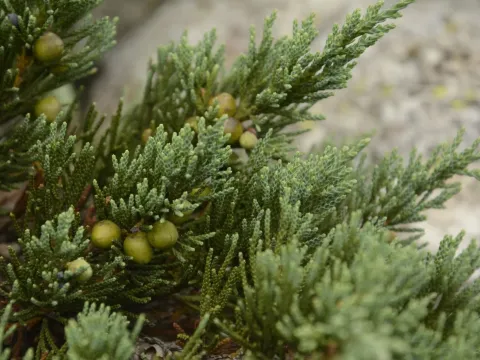
Juniperus indica
Juniperus indica
Juniperus indica, commonly known as the Indian juniper, is a member of the Cupressaceae family. It is an evergreen coniferous species native to the high-altitude regions of the Himalayas, including parts of Tibet, Nepal, and India, where it adapts to harsh alpine environments.
What the section contains
Juniperus indica
Botanically, it is recognized for its slow-growing habit and ability to withstand extreme cold and high solar radiation. The plant typically features dense, scale-like foliage and a compact growth form, making it an excellent choice for rocky or mountainous terrain.
In terms of cultivation requirements, this species demands full sun exposure and excellent drainage. It is highly intolerant of waterlogged soils, which can lead to rapid root decay, therefore it should be planted in well-aerated, sandy, or stony substrates.
Regarding climate, the plant thrives in cool, dry conditions. It is drought-tolerant once established, requiring minimal supplemental irrigation, which makes it a sustainable option for water-wise landscaping projects in temperate climates.
The primary horticultural application of Juniperus indica is aesthetic. It is frequently featured in rock gardens, gravel beds, and as a focal point in landscape designs, where its hardy nature and evergreen aesthetic provide value throughout the year.
The most significant threats to Juniperus indica include fungal infections such as juniper blight and various rust diseases, which thrive in conditions of high humidity and poor air circulation.
Insect pests, including spider mites and various scale insects, can infest the foliage, leading to yellowing, loss of needles, and a general decline in the plant's overall vigor.
To maintain a healthy specimen, it is recommended to monitor the plants regularly and ensure proper spacing to promote airflow around the canopy.
Application of appropriate fungicides or insecticides should be considered if an infestation is detected, following the specific dosage guidelines for coniferous species.
Maintaining a clean, weed-free environment and performing periodic sanitation pruning helps prevent the onset of common pests and diseases in cultivated settings.