
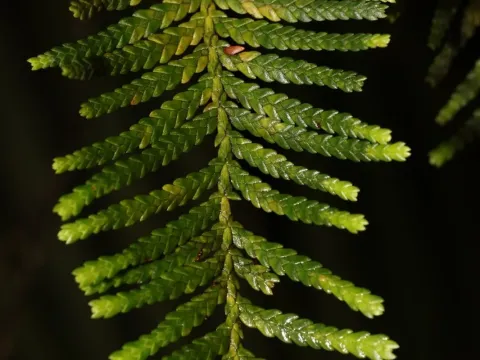
Libocedrus plumosa
Libocedrus plumosa (Don) Sargent
Libocedrus plumosa, known as Kawaka, is a distinct coniferous tree belonging to the Cupressaceae family, endemic to New Zealand. It is recognized for its dense, fern-like foliage and pyramidal habit that matures into a majestic evergreen specimen.
What the section contains
Libocedrus plumosa
The plant thrives in mild, humid climates where frost is minimal and air humidity remains consistently high. It performs best in sheltered locations that provide protection from drying winds, which can damage its delicate, flattened branchlets.
Soil requirements focus on deep, well-draining substrates rich in organic matter with a slightly acidic to neutral pH level. Proper aeration of the root system is critical, as the species is highly susceptible to root rot if grown in heavy, compacted, or waterlogged soils.
Cultivation practices involve regular monitoring of moisture levels, particularly during the establishment phase. While the tree shows shade tolerance when young, exposure to filtered sunlight is essential for optimal growth and the development of its vibrant green color.
Commercially, it is valued primarily in horticulture for its exceptional aesthetic appeal as an ornamental tree in parks and gardens. Its timber is also historically noted for its durability, fine grain, and resistance to environmental decay, often used in cabinetry.
The primary threats include fungal diseases such as Phytophthora, which typically emerge in waterlogged soil conditions. Pest infestations, including aphids and scale insects, may occur, necessitating regular inspection of the lower leaf surfaces and foliage density.