
Leyland cypress
Cupressus hybrids
Description
Growing requirements
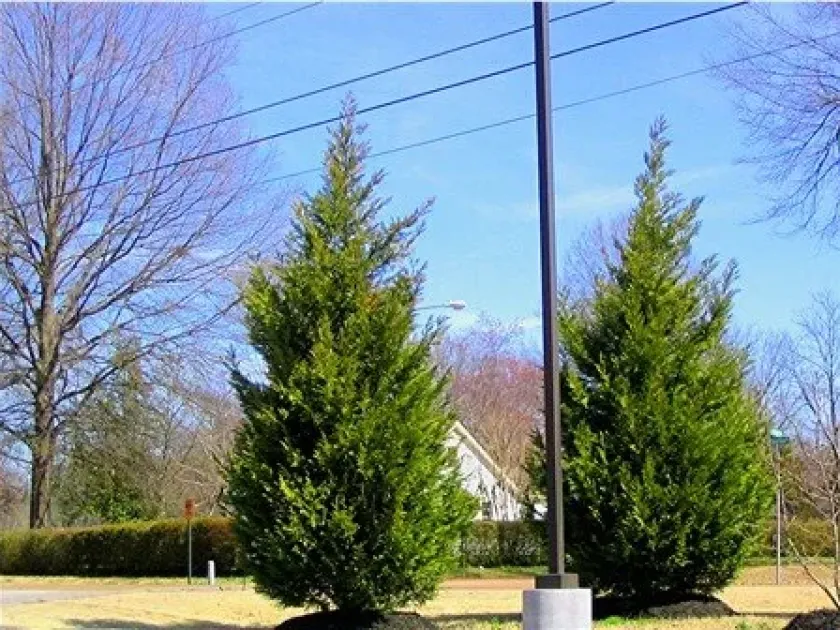
The Leyland cypress (Cupressocyparis leylandii) is a fast-growing hybrid conifer within the Cupressaceae family. It is a sterile intergeneric hybrid resulting from a cross between the Monterey cypress and the Nootka cypress, prized globally for its rapid vertical development.
For successful cultivation, this species requires well-drained, nutrient-rich soil and full sun exposure. While highly adaptable, it thrives best in environments where moisture is balanced; it cannot tolerate permanently waterlogged sites which often lead to root decline.
The plant demonstrates significant hardiness to various climatic zones, though it requires shelter from extreme cold in its initial establishment years. It is widely used in reforestation and as a windbreak due to its rapid biomass accumulation capacity.
Agrotechnical management is dominated by pruning. Without consistent trimming, the tree can quickly outgrow its designated space. Regular shearing, usually performed twice per growing season, ensures the development of a dense, opaque foliage barrier.
Economically, the Leyland cypress is a staple in the nursery trade and landscape architecture. Its ability to create instant privacy screens makes it one of the most commercially valuable evergreen plants for residential and municipal borders.
Main diseases and pests
Significant threats include Seiridium canker, a fungal disease that causes branch dieback and lesions on the bark. Managing soil moisture and promoting good air circulation around the canopy are the primary preventative measures against these pathogens.
Pests like bagworms and spider mites frequently affect the tree's vitality. In periods of high heat and low humidity, mite populations can explode, requiring targeted miticide treatments to maintain foliage health and prevent browning.