
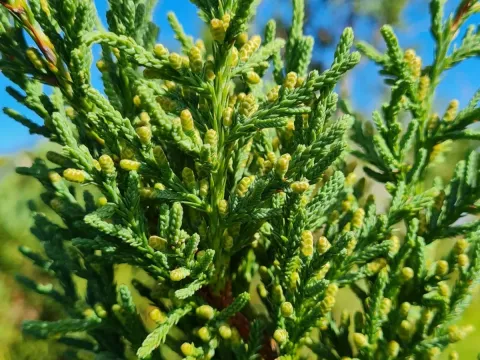
Bermuda juniper
Juniperus bermudiana
The Bermuda juniper (Juniperus bermudiana) is a distinctive evergreen coniferous species belonging to the Cypress family (Cupressaceae). It is a native endemic tree exclusive to the Bermuda islands, having played a fundamental role in the local ecology for centuries.
What the section contains
Bermuda juniper
The tree is known for its slow growth rate and can reach heights of up to 15 meters. It exhibits a rugged structure with a dense crown, featuring dark green foliage that is highly resilient to harsh coastal environments and salt-laden ocean winds.
Regarding soil requirements, the species thrives in well-drained limestone-based substrates. It is extremely sensitive to waterlogging, necessitating excellent soil aeration to prevent root rot, which is a common issue in its natural habitat during heavy rainfall periods.
The climate requirements include a subtropical environment where freezing temperatures are rare. It demands consistent sunlight and moderate humidity levels to maintain optimal physiological processes and support the development of its specialized resinous wood.
Current agricultural and silvicultural practices for this species are focused on conservation biology. Cultivation involves careful seed selection, protection from invasive competing species, and the promotion of genetic diversity to ensure long-term population viability.
The primary threat to the Bermuda juniper has historically been the introduction of two invasive scale insect species, Carulaspis minima and Lepidosaphes newsteadi, which decimated the population during the mid-20th century.
These pests colonize the branches and foliage, extracting essential nutrients and moisture, which leads to the decline and eventual death of the trees. The impact was devastating, resulting in the loss of the vast majority of mature forests.
Beyond insect pests, the trees are vulnerable to secondary fungal infections that take hold when the plant is stressed. These pathogens exploit the weakened defenses of trees already compromised by insect feeding.
Modern management includes intensive monitoring of remaining stands and the testing of potentially resistant cultivars that may offer a natural defense against these invasive organisms.
Conservation efforts also emphasize the removal of invasive plant species that compete for resources, light, and space, creating a more favorable environment for young Bermuda juniper saplings to establish themselves.