
Atlas cypress
Cupressus atlantica
Description
Growing requirements
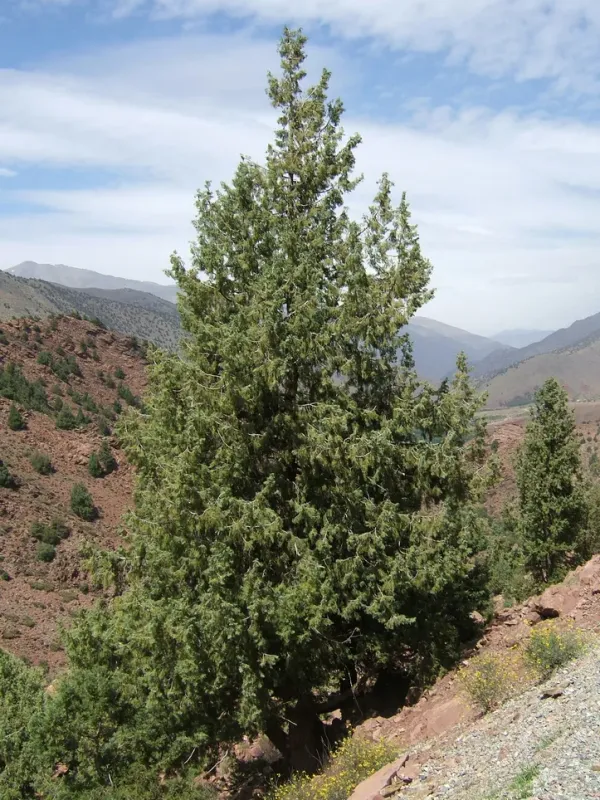
The Atlas cypress (Cupressus atlantica) is a distinct member of the Cupressaceae family, primarily native to the Atlas Mountains of Morocco. It is highly valued in forestry and arboriculture for its exceptional drought resistance and its ability to thrive in poor, rocky soil conditions.
For successful growth, this species requires well-drained soil with a neutral to alkaline pH. Heavy, waterlogged soils are detrimental to its root health and should be avoided at all costs. The tree performs best in sunny locations where it can receive maximum exposure to sunlight throughout the day.
The species is well-adapted to Mediterranean climates characterized by hot, arid summers and temperate winters. While it can withstand periods of frost, it is essential to ensure the root system is not subjected to prolonged freezing temperatures while in wet soil conditions.
Cultivation practices for this species are relatively simple once the tree is established. Irrigation is necessary primarily during the first two to three years of growth to ensure proper root development. After that, the Atlas cypress is largely self-sufficient, relying on deep root penetration to access subterranean moisture.
Economically, the Atlas cypress is prized for its high-quality, aromatic timber which exhibits significant durability against decay. Beyond its wood value, it serves a critical role in reforestation projects aimed at stabilizing eroded slopes in arid mountain regions.
Main diseases and pests
The main pathological threat to the Atlas cypress is the Seiridium canker, which affects branches and stems, leading to severe dieback. Management involves strict sanitary measures, including the pruning and immediate disposal of infected material to prevent the spread of fungal spores.
Pest issues often arise in stressed trees, with wood-boring beetles being the most significant concern. Additionally, cypress aphids can cause damage during dry spells; maintaining tree vigor through appropriate site selection is the best preventative strategy against such infestations.