
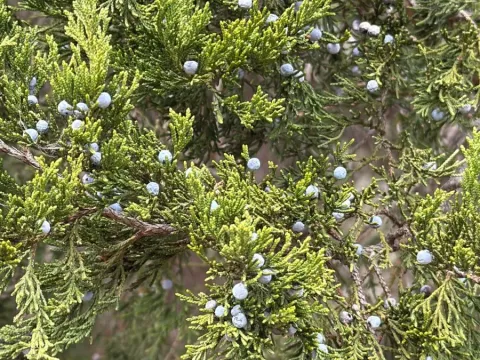
Ashe juniper
Juniperus ashei
Ashe juniper (Juniperus ashei) is an evergreen coniferous tree or shrub belonging to the Cupressaceae family. Native to North America, specifically concentrated in the south-central United States, this species is well-adapted to limestone-rich soils and rocky terrain where moisture is often limited.
What the section contains
Ashe juniper
The plant is highly prized for its exceptional drought tolerance and resilience in harsh environmental conditions. It thrives in well-drained, alkaline soils and performs best under full sun, although it can tolerate partial shade during its early stages of development.
Agronomically, the Ashe juniper requires minimal irrigation once established, making it a sustainable choice for xeriscaping and low-maintenance landscapes. It is capable of enduring significant temperature fluctuations, typical of its native regional climate.
Soil structure is critical for this species; it dislikes compacted, waterlogged clay which can lead to rapid root decline. Providing a porous, sandy, or stony substrate helps replicate its natural habitat and ensures vigorous growth of the root system.
Economically, the wood of Juniperus ashei is recognized for its durability and resistance to decay. It is frequently used for fence posts and specialty artisanal woodwork, while in urban planning, it serves as an effective windbreak and visual screen.
The species is susceptible to cedar-apple rust, a fungal disease caused by Gymnosporangium species. This fungus often requires a host from the Rosaceae family, making the proximity of apple or hawthorn trees a major factor in the disease cycle.
Pests such as the juniper scale and spider mites are common threats that thrive in dry, stagnant air conditions. Infestations lead to yellowing of the foliage and eventual thinning of the branches if left unchecked by integrated pest management practices.
Root rot, driven by excessive soil moisture and poor drainage, is the primary killer of young seedlings. Proper site selection and avoiding deep irrigation near the trunk are essential cultural practices to maintain plant health and vigor.
Mealybugs can often be found in the dense, inner foliage of the juniper. Regular inspection and the application of horticultural oils or systemic insecticides during the dormant season can effectively manage these populations.
Canker diseases, often entering through pruning wounds or physical damage, can lead to localized dieback of limbs. It is recommended to sterilize pruning tools and ensure the canopy has enough airflow to minimize the development of opportunistic fungal pathogens.