
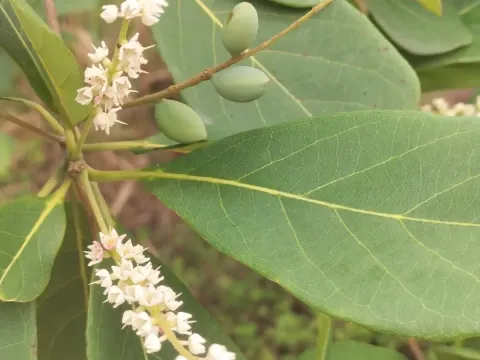
Terminalia muelleri
Terminalia muelleri
Terminalia muelleri is a prominent member of the Combretaceae family, native to the tropical northern regions of Australia. This evergreen tree is valued for its distinct morphological structure, characterized by dense, dark-green foliage and a robust, spreading canopy.
What the section contains
Terminalia muelleri
The cultivation of this species requires a climate that closely mimics its native habitat, specifically warm temperatures and sufficient humidity. It is strictly a frost-sensitive plant, making it suitable only for zones with stable, warm meteorological conditions throughout the year.
Regarding soil requirements, the species thrives in well-drained loamy or sandy substrates. It possesses a high tolerance for salinity, which allows it to be utilized effectively in coastal landscaping projects where other deciduous species would fail to survive.
Light intensity is a critical factor for the development of Terminalia muelleri. It demands full exposure to direct sunlight to maintain the integrity of its leaves and to prevent the elongation of branches, which can compromise the tree's overall structural aesthetics.
Water management involves consistent moisture during the establishment phase, transitioning to moderate irrigation as the root system matures. The tree is capable of enduring brief dry spells once it has firmly established its underground structure in the soil profile.
While Terminalia muelleri is generally hardy, it can be susceptible to common tropical pests such as scale insects and leaf-miners. Regular monitoring of the underside of leaves is recommended to prevent infestation outbreaks that can reduce the tree's decorative value.
Fungal diseases related to root rot are the primary threat in environments with poor soil drainage. Maintaining optimal aeration in the root zone is the most effective preventative measure against the development of soil-borne pathogens.
Leaf spot pathogens may occur during periods of high humidity and poor air circulation. Proper pruning is essential to improve airflow through the canopy, which significantly reduces the risk of fungal proliferation within the foliage clusters.
Nutrient deficiencies, particularly involving magnesium or iron, can occur if the soil pH is not maintained within the slightly acidic to neutral range. Periodic soil testing ensures that the plant receives appropriate fertilization for vigorous growth.
Integrated pest management strategies should be applied during the early vegetative cycle. This includes the use of organic deterrents or specific biological controls to minimize chemical interventions, preserving the ecological balance of the surrounding landscape.