
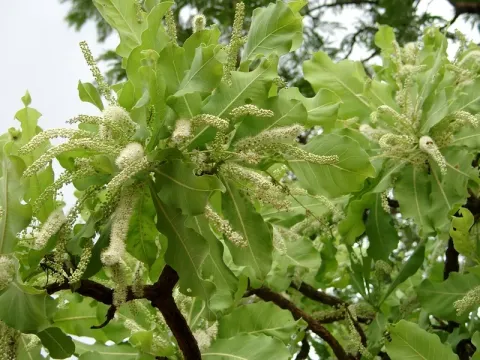
Terminalia macroptera
Terminalia macroptera
Propagation of Terminalia macroptera in its natural range is primarily achieved through seeds. Sowing is recommended at the start of the rainy season when soil moisture levels are optimal to support seed stratification and germination.
What the section contains
Terminalia macroptera
To enhance germination rates, seeds are often subjected to pre-sowing treatments, such as soaking in water for 24 hours. Seeds are then sown in nurseries or directly into the soil at a depth of 2–3 cm, maintaining sufficient row spacing for future seedling transplanting.
Young seedlings require regular watering during their first months, particularly in regions with a pronounced dry season. The ideal temperature range for seed germination is between 25 and 30 degrees Celsius.
Transplanting seedlings to their final location is carried out once they reach a height of 30–50 cm, which typically occurs 6–8 months post-sowing. This ensures the plant is better adapted to field conditions and has established a robust root system.
A critical factor during sowing is selecting a site with excellent drainage, as waterlogging in the weeks immediately following germination can lead to fungal infections and seedling mortality.
Terminalia macroptera, a member of the Combretaceae family, is a characteristic plant of the African savanna. It thrives in open areas with intense solar exposure and is highly tolerant of high ambient temperatures.
The crop is adapted to various soil types, including rocky and sandy substrates, though it shows optimal growth performance on deep, loamy soils with a neutral to slightly acidic pH.
The tree exhibits high drought resistance due to its ability to develop a deep taproot system, which enables it to access moisture from lower soil horizons during prolonged dry periods.
Optimal climatic conditions for cultivation include tropical zones with annual rainfall ranging from 600 to 1200 mm. The plant is capable of withstanding occasional wildfires, which are common in African savanna ecosystems.
Maintenance of mature stands is minimal; however, to increase productivity, sanitary pruning of dry branches and management of stand density are recommended to prevent nutrient competition among individual trees.
The economic utility of Terminalia macroptera is diverse: it is valued as a source of medicinal raw materials, livestock fodder, and timber. The primary harvest consists of bark, roots, and leaves, all of which possess significant pharmacological properties.
Harvesting of bark and leaves is conducted following sustainable principles to prevent tree mortality. Sustainable yields become possible 5–7 years after the initial planting in an agroforestry context.
Terminalia timber is characterized by medium density and is utilized in local construction for making tools and furniture. It is resistant to decay and termite infestation, which enhances its value in tropical environments.
In livestock farming, young shoots and leaves serve as an additional biomass source for grazing, especially during the dry season when other forage is scarce.
The biological productivity of the crop is directly dependent on soil fertility and the planting density, which ultimately determines the total mass of plant material harvested per hectare.
Major diseases of Terminalia macroptera are associated with fungal infections of the root system caused by excessive soil moisture. These manifest as root rots, which slow tree growth and lead to premature leaf shedding.
Among pests, phytophagous insects that feed on young shoots and leaves are the most significant. Specifically, caterpillar infestations from various Lepidoptera species can significantly reduce the vegetative mass of young seedlings.
Parasitic plants, such as mistletoe, can colonize the branches of Terminalia, extracting nutrients and water from the tree and thereby weakening the overall condition of the plantation.
Pest management in agroforestry systems focuses on adhering to sanitary norms, such as the removal of infected plant parts and maintaining optimal air circulation within the tree canopy.
Chemical control methods are rarely employed due to the plant's use in traditional medicine; therefore, priority is given to biological control methods and the selection of disease-resistant cultivation sites.