
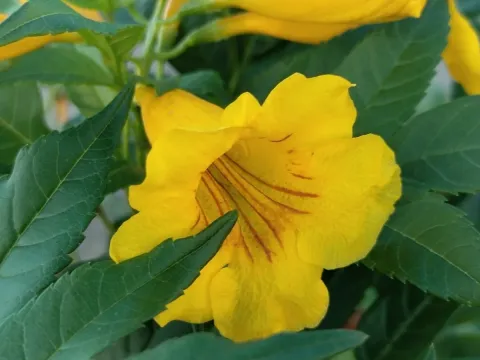
Tecoma
Tecoma Juss.
Tecoma (Tecoma Juss.) is a genus of perennial shrubs and trees belonging to the Bignoniaceae family. Native to tropical and subtropical regions of the Americas, this culture is highly valued for its intense flowering and structural versatility.
What the section contains


Tecoma
The culture requires a high amount of solar radiation to maintain healthy growth. In non-tropical regions, it is cultivated primarily in greenhouses or as a potted plant, as it cannot withstand prolonged sub-zero temperatures.
Soil requirements include excellent drainage and moderate fertility. It is essential to maintain a soil pH ranging from neutral to slightly acidic, ensuring that the substrate does not become waterlogged during the active growing season.
Botanically, the plant is characterized by pinnate leaves and vibrant, trumpet-shaped flowers. It exhibits strong apical dominance, making regular pruning an essential part of its agronomic maintenance to encourage bushier growth.
Economically, Tecoma is a significant ornamental plant. It is widely used in landscape architecture for urban greening, garden hedges, and as a decorative element in large conservatory settings.
Common pests affecting Tecoma include spider mites, whiteflies, and aphids. These insects tend to colonize the underside of the leaves and tender new stems, often leading to stunted growth if not managed.
Fungal issues, such as powdery mildew, often arise due to poor ventilation or high humidity levels. Preventive measures include ensuring adequate spacing between plants and monitoring moisture levels in the foliage.
Agronomic control involves the application of appropriate miticides and insecticides when infestations are identified. Integrated Pest Management (IPM) practices are highly recommended for greenhouse production.
Sanitary pruning is critical to remove dead or diseased branches that might serve as a reservoir for pathogens. Clean equipment is mandatory to prevent the spread of infections between individual plants.
Maintaining a robust fertilization schedule helps the plant withstand biotic stress. A balanced NPK ratio, with attention to micronutrients, ensures the plant remains resilient against potential threats throughout its lifecycle.