
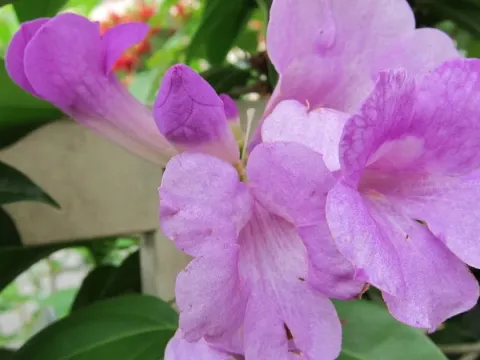
Garlic vine
Pseudocalymma elegans
Pseudocalymma elegans, commonly known as the garlic vine, is a prominent member of the Bignoniaceae family, celebrated for its trumpet-shaped flowers and garlic-scented foliage.
What the section contains
Garlic vine
Native to tropical regions of Central and South America, this plant is well-adapted to warm climates where it functions as a fast-growing woody vine in forest canopies.
Successful cultivation requires soil that is rich in organic matter, loose in texture, and provided with excellent drainage to prevent the accumulation of excess water around the roots.
The plant thrives under direct sunlight and requires a support structure, such as a trellis or fence, to manage its vigorous growth and allow for full sun exposure to all parts of the vine.
Temperature management is critical, as this tropical species performs best when kept in environments with steady warmth and high humidity, avoiding any exposure to frost or prolonged cold.
The garlic vine is susceptible to common greenhouse and garden pests, including spider mites, scale insects, and mealybugs that congregate on the stems and undersides of leaves.
Root rot remains the most significant disease threat, typically caused by waterlogged soil conditions that favor the development of various pathogenic oomycetes.
Managing pest infestations often involves the application of horticultural oils or insecticidal soaps, which are effective against soft-bodied insects while being relatively safe for the plant.
To reduce the likelihood of fungal infections, it is advised to avoid overhead watering and ensure that the plant has adequate spacing to facilitate rapid drying of the foliage.
Regular monitoring of the vine's health and immediate removal of any diseased plant tissue are essential practices to maintain the longevity and vitality of the specimen.