
Pink trumpet vine
Podranea ricasoliana
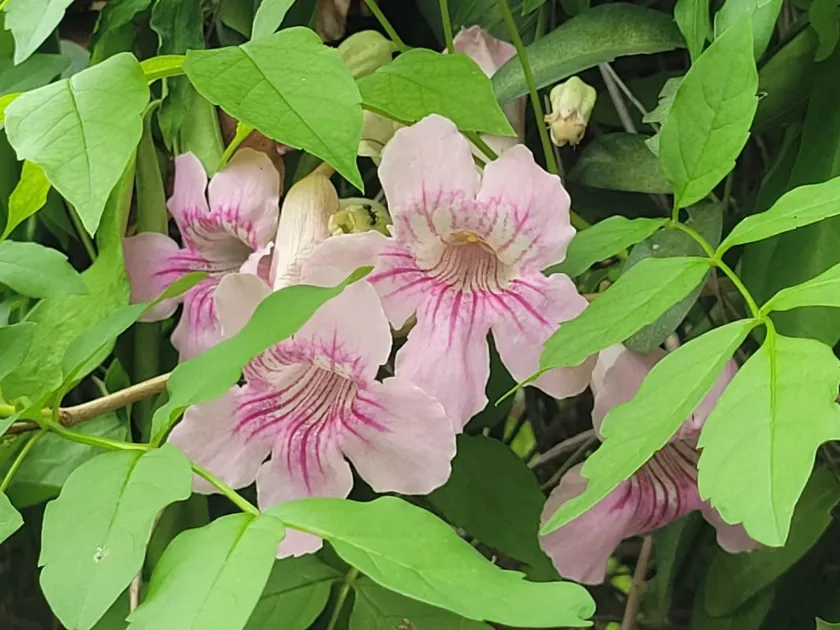
Description
Growing requirements
The pink trumpet vine (Podranea ricasoliana) is an attractive, woody evergreen climber belonging to the Bignoniaceae family. Native to South Africa, it thrives in warm, sunny environments and is widely appreciated for its delicate, bell-shaped flowers.
The plant requires a warm climate and is frost-tender, making it suitable for temperate regions only if protected during winter or grown in containers. Optimal growth occurs in temperatures ranging from 20 to 25 degrees Celsius.
Successful cultivation requires fertile, well-draining soil with a neutral to slightly acidic pH. Waterlogging is detrimental to the root system, so adequate drainage material must be placed at the bottom of the container or planting site.
Agrotechnical management involves the use of sturdy support structures, as the vine can grow up to 5 meters in length. Regular pruning after the flowering season is essential to maintain the plant's shape and encourage more prolific blooming in the following cycle.
During the active growth phase, the vine requires regular watering and fertilization with balanced NPK formulas. In winter, growth slows down, and watering should be reduced to mimic a natural dormant period under cooler conditions.
Main diseases and pests
Common pests affecting this vine include spider mites, aphids, and mealybugs, especially when kept in closed environments with low airflow. Systemic insecticides are recommended for effective control when infestations are detected.
Overwatering and poor ventilation significantly increase the risk of fungal infections, including root rot and leaf spots. Providing sufficient space between plants and ensuring good air circulation are critical preventative measures.
Nutrient deficiencies, particularly iron or magnesium, can cause chlorosis in leaves. Maintaining proper soil health and applying micronutrient supplements during the growth season helps to prevent such physiological disorders.
Poor lighting conditions weaken the plant's structural integrity, making it more susceptible to opportunistic diseases. Ensuring the plant receives bright, filtered light is crucial for maintaining its natural disease resistance.
Integrating integrated pest management practices and maintaining high hygiene standards when pruning help to preserve the health of the vine. With consistent care, this exotic ornamental is highly resistant to major threats.