
Parmentiera
Parmentiera
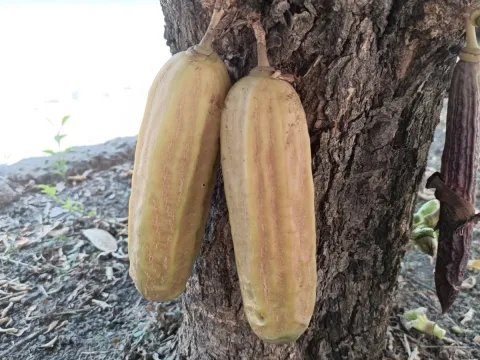
Parmentiera is a genus of tropical trees belonging to the Bignoniaceae family. Native to Central and South America, these trees are distinguished by their unique botanical trait of cauliflory, where flowers and fruits develop directly on the trunk and main branches.
What the section contains


Parmentiera
The plant thrives in hot, humid tropical climates. It requires nutrient-rich, well-draining soil to support its rapid growth. Consistent moisture is crucial for the development of the succulent-like fruits, making the tree sensitive to prolonged droughts.
Botanically, Parmentiera features compound, palmate leaves and large, nocturnal flowers. These flowers are specifically adapted for pollination by bats, which are attracted to their color and scent during the night.
Agricultural management includes site selection with protection from high winds, as the tree's wood can be brittle. It is typically grown in mixed tropical orchards where it benefits from the microclimate created by other larger shade-providing trees.
The fruits of various species are edible and possess a mild, apple-like, or cucumber-like flavor. Beyond food use, the plant holds significance in local folk medicine, where parts of the fruit and tree are utilized in various healing traditions.
Root rot is the most significant threat to Parmentiera, typically resulting from waterlogged soil conditions. Proper site selection and drainage design are mandatory for establishing healthy orchards.
Scale insects and mealybugs represent common pests that affect the foliage and stems. Integrated pest management practices, including natural predators and targeted applications, are effective in controlling these populations.
Fungal pathogens such as anthracnose can lead to significant fruit loss during the rainy season. Farmers must prioritize crown thinning to allow better airflow and reduce the humidity levels around the fruiting areas.
Stem-boring insects pose a danger by creating galleries inside the trunk, which can weaken the structural integrity of the tree. Regular visual inspections are recommended to catch infestations before they cause irreversible damage.
Weed competition for nitrogen and minerals can severely restrict growth in young trees. Establishing a weed-free zone around the base using organic mulch is a proven method to enhance the plant's resilience.