
Pink trumpet tree
Tabebuia heterophylla
Description
Growing requirements
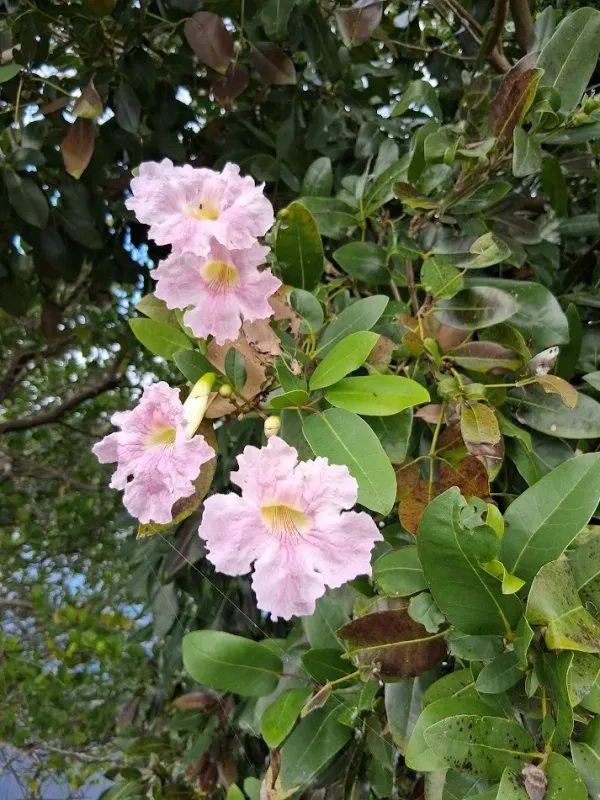
The pink trumpet tree (Tabebuia heterophylla) is a member of the Bignoniaceae family, native to the Caribbean islands and parts of Central America. It is highly valued as an ornamental tree in tropical and subtropical regions for its stunning floral display.
This species thrives in full sun and requires well-drained soil to prevent root issues. While it can tolerate a variety of soil types, it performs best in slightly acidic to neutral environments with ample space for root development.
Botanically, it is known for its palmately compound leaves and large, funnel-shaped flowers that bloom in shades of white to pink. The tree often sheds its leaves during the dry season, just before or during the flowering period, creating a spectacular visual effect.
Agricultural practices for successful growth include light pruning during the early years to encourage a strong central leader and removing crossing branches. The species is notably drought-tolerant once established and can withstand strong coastal winds.
Economically, it is extensively used in urban forestry and landscape design. Its dense wood, although less commercially exploited than some other Tabebuia species, is highly durable and resistant to decay, making it suitable for high-quality timber needs.
Main diseases and pests
The pink trumpet tree is susceptible to several pests, including scale insects and mealybugs, which tend to gather on the undersides of leaves and young stems.
Fungal leaf spot diseases can become problematic during exceptionally wet seasons, leading to premature defoliation if not managed correctly.
Root rot caused by Phytophthora or similar pathogens is a major threat in poorly drained or waterlogged soils, which often proves fatal for the tree.
Caterpillars can cause significant damage to the foliage during the spring growing season, requiring occasional monitoring and biological control interventions.
Maintaining proper tree spacing and ensuring adequate airflow are the best preventative measures against most biotic and abiotic threats to this species.