
Podranea
Podranea
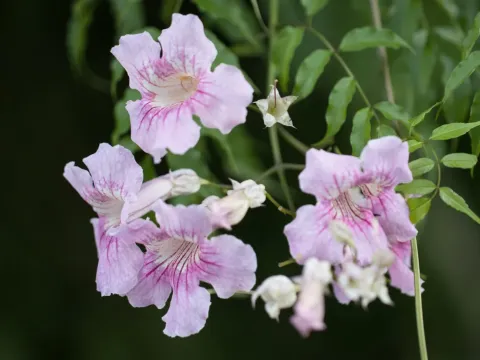
Podranea is a genus of flowering woody vines belonging to the Bignoniaceae family. Known for their trumpet-shaped pink flowers, these plants are popular in warm-climate landscaping for their rapid growth and aesthetic appeal.
What the section contains
Podranea
Native to Southern Africa, these plants naturally thrive in tropical and subtropical regions. They require significant sunlight to produce healthy flowers and dense foliage throughout the growing season.
The plant is not frost-tolerant and requires specific climate conditions to survive. In regions with freezing temperatures, gardeners must cultivate Podranea in containers and move them to sheltered areas during winter months.
Soil requirements are focused on fertility and drainage. Podranea performs best in well-draining, loamy soil enriched with organic matter, which ensures the roots remain healthy and free from waterlogging.
Agricultural management involves regular pruning to maintain shape and promote flowering. Since the plant is a vigorous climber, providing sturdy structures or trellises is essential for supporting its vertical growth.
Spider mites are the most common pest for Podranea, particularly when the environment is dry and warm. These pests can rapidly affect the health of the foliage if not treated early with appropriate acaricides.
Root rot is a major threat caused by overwatering or poor soil drainage. Maintaining a proper irrigation schedule is critical to ensuring the plant stays healthy, especially when grown in confined containers.
Mealybugs can occasionally cluster on the stems and undersides of leaves, weakening the plant. Regular monitoring and physical removal or soap-based treatments are effective control methods.
Fungal issues, such as powdery mildew, may occur if there is insufficient air circulation around the vines. Proper spacing and consistent pruning help mitigate the risks of these infections.
Nutrient deficiencies, specifically iron chlorosis, can manifest as yellowing leaves if the soil pH is too high. Applying iron chelates can help correct this condition and restore the plant's natural vibrant green color.