
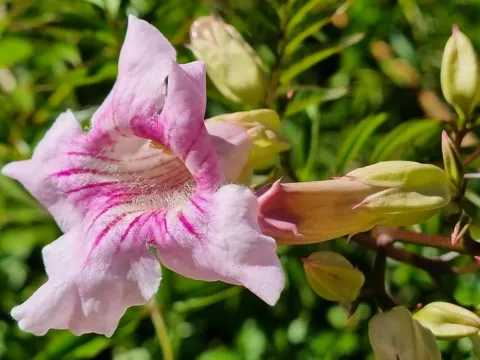
Queen of Sheba
Podranea brycei
Podranea brycei, commonly known as the Queen of Sheba, is a robust woody vine belonging to the Bignoniaceae family. Originating from the tropical regions of Africa, this plant is cherished for its vigorous growth habit and stunning floral displays.
What the section contains
Queen of Sheba
Botanically, the plant is characterized by pinnate leaves and trumpet-shaped flowers that appear in clusters, creating a striking visual impact on trellises, fences, and walls. It is a climbing species that relies on its woody stems to cover vertical structures effectively.
Regarding climate, this species demands warm, frost-free environments. It thrives in full sun, which is essential to stimulate the production of its characteristic blooms throughout the active growing season.
The soil requirements involve well-drained, fertile compost or loam-based media. Consistent moisture is vital during the heat of summer, but the root system must be protected from waterlogging, which often leads to structural collapse of the plant.
For gardeners in temperate zones, the most viable method is to grow the plant in large containers, allowing for easy relocation to a sheltered position or conservatory during colder months.
Common pests that frequently infest Podranea brycei include aphids, which tend to congregate on the succulent tips of new growth, causing leaf curling and stunted development.
Spider mites represent a significant threat, especially in greenhouse or indoor environments where the air is dry and warm, leading to yellowing and shedding of foliage.
Mealybugs can also be found hiding in the leaf axils or along the woody stems, where they can be difficult to eradicate without systemic treatments.
Fungal issues such as powdery mildew are common when the plant is kept in conditions with poor airflow or high humidity combined with limited sunlight exposure.
Root rot is the primary physiological disorder, usually caused by improper watering techniques or heavy, non-draining soil mixtures that suffocate the plant roots.