
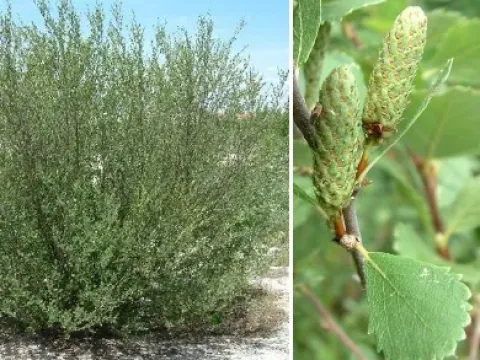
Northern birch
Betula borealis
Northern birch (Betula borealis) is a resilient tree species belonging to the Betulaceae family, specifically evolved for life in arctic and subarctic climates.
What the section contains
Northern birch
Botanically, this species is distinguished by its small stature and high degree of frost resistance, which allows it to thrive in regions where more demanding tree species fail to survive.
The culture requires well-drained soils and shows a preference for open, sunny locations, as it is highly sensitive to shading by taller vegetation in northern environments.
Regarding agrotechnics, the primary focus is on ensuring initial establishment during the short growing season, often involving careful site selection to avoid stagnant water areas.
Economically, Northern birch is valued for its role in landscape restoration and erosion control, as well as providing essential biomass in regions where timber resources are naturally scarce.
The primary threats include fungal pathogens such as leaf rust and wood-decay fungi, which can compromise the tree's health during unusually humid and warm summer months.
Insect pests, including various species of birch leaf miners and lepidopteran larvae, pose a constant risk, potentially reducing the tree's ability to store energy for winter.
Wildlife damage, particularly from browsing animals like moose and hares, can severely impact young forest stands, leading to structural deformation or susceptibility to secondary rot.
Environmental stress, such as frost heaving of soil or extreme temperature fluctuations in early spring, remains a critical factor affecting survival rates of young saplings.
Integrated forest management strategies, such as thinning and regular monitoring for signs of infestation, are crucial for maintaining the vigor of Northern birch stands.