
Middendorff's birch
Betula middendorffii
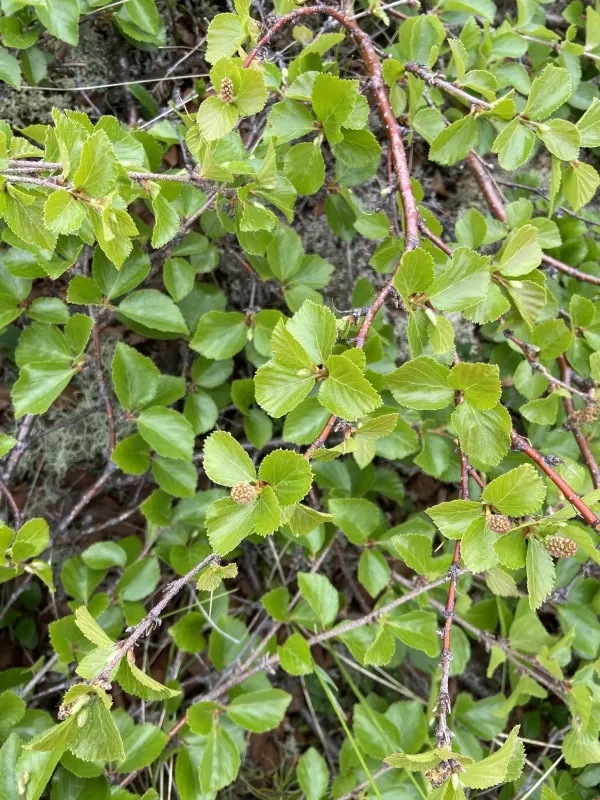
Description
Growing requirements
Middendorff's birch (Betula middendorffii) belongs to the family Betulaceae. It is primarily a shrub form of birch, characterized by its exceptional adaptation to harsh climatic conditions.
This crop originates from regions of Eastern Siberia and the Far East, and is also found in the northern parts of Mongolia, China, and Japan. It is a typical representative of the subarctic and temperate flora, often growing in permafrost conditions.
The plant prefers well-moistened but well-drained soils. Optimal growth rates are observed in marshy areas, alpine tundra belts, on the edges of sphagnum bogs, and in the undergrowth of open forests.
Successful cultivation requires a cold climate with a pronounced dormant period. The species is highly photophilous and tolerates heavy shading poorly, preferring open spaces of the tundra or forest-tundra type.
The cultivation technique includes maintaining a specific pH balance, close to neutral or slightly acidic. An important factor is the preservation of the natural mycorrhizal layer in the root zone for full seedling nutrition.
Main diseases and pests
The main threats are associated with the spread of specific fungal infections that cause leaf spotting during periods of prolonged rainfall.
Pests such as leaf rollers and various species of birch sawflies can significantly reduce plant biomass by consuming young foliage.
Under conditions of atypical warming, the culture becomes vulnerable to secondary pests — bark beetles, which attack weakened shoots.
Excessive soil compaction and disruption of the hydrological regime lead to root system degradation and subsequent drying of the shrub.
The anthropogenic factor remains the primary threat: due to the slow growth rate, the recovery of the population after fires or mechanical damage takes decades.