
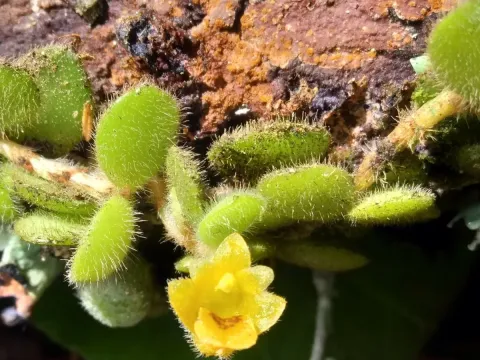
Trichotosia
Trichotosia
Trichotosia is a genus of perennial epiphytic orchids belonging to the family Orchidaceae. Native to the tropical regions of Southeast Asia, these plants thrive in humid forests, often growing on tree trunks in their natural habitat.
What the section contains

Trichotosia
The botanical defining feature of Trichotosia is the dense hair covering the stems and leaves, which gives the genus its name. This pubescence helps the plant manage moisture levels and provides some level of protection against intense sunlight in their native environment.
Cultivation requires high ambient humidity and consistent warmth. In a managed environment, growers should aim for a stable temperature, avoiding the drastic fluctuations that can cause stress to the plant.
The potting medium must be extremely well-draining, typically consisting of high-quality orchid bark, perlite, and sphagnum moss. This combination ensures that air reaches the roots, which is critical for preventing root rot in this epiphytic species.
Lighting should be bright but filtered. Direct sunlight is generally unsuitable for Trichotosia and can easily scorch the foliage. In indoor settings, supplementary LED lighting is often used to ensure the plant receives adequate light throughout the year.
Fungal pathogens are the primary threat to Trichotosia, often resulting from improper watering and poor air circulation. When the growing medium remains waterlogged, the roots quickly become susceptible to decay.
Pests such as spider mites and mealybugs are frequently encountered in orchid collections. Due to the fine hairs on the stems of Trichotosia, these pests can be difficult to spot and even harder to eradicate once they establish a colony.
Effective management involves the use of systemic insecticides specifically labeled for delicate orchid species. It is important to avoid aggressive treatments that could harm the delicate tissue or the protective hair covering of the plant.
Preventative measures include regular inspection and ensuring that the growing area has constant, gentle air movement. Avoiding overhead watering can significantly reduce the risk of leaf spot diseases and stem rot.
If the plant shows signs of dehydration or stunted growth, it is often a signal that the root system has been compromised. Timely repotting and adjusting the moisture regime are essential steps in saving an infected or struggling plant.