
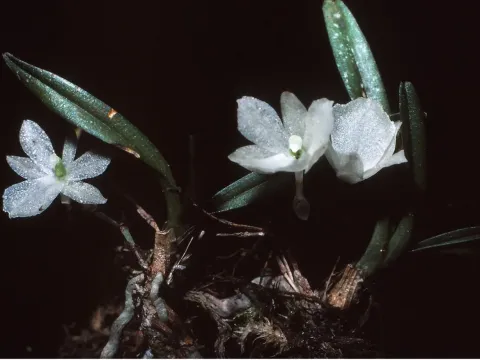
Ypsilopus
Ypsilopus
Ypsilopus is a genus of epiphytic orchids belonging to the Orchidaceae family. These fascinating plants are primarily native to the tropical regions of East Africa, where they inhabit humid forest environments attached to the trunks and branches of trees.
What the section contains


Ypsilopus
To thrive in a controlled environment, Ypsilopus requires very specific conditions, primarily high humidity levels ranging from 70% to 80%. Proper air movement is essential to prevent the accumulation of stagnant moisture around the root system, which is prone to rot.
Cultivation should utilize an open, well-draining medium, such as coarse bark, charcoal, or specialized orchid mounts. This design mimics the natural epiphytic lifestyle of the plant, ensuring that roots can dry out sufficiently between irrigation cycles.
Lighting requirements are focused on bright, indirect exposure. Direct sunlight can severely damage the foliage, leading to dehydration and necrosis. In indoor setups, a position near a north or east-facing window is usually preferred to provide the necessary spectral range.
Temperature management is vital, with a preferred range of 20°C to 28°C during the day. A slight temperature drop at night is recommended to stimulate flowering and maintain the plant's metabolic health throughout the seasonal cycles.
Common pests associated with Ypsilopus include scale insects and mealybugs, which tend to hide in leaf axils. Regular inspections and the application of mild horticultural oils or specialized insecticides are necessary to control these infestations.
Root rot is the most prevalent threat to the health of the plant. It is almost exclusively caused by improper watering techniques or a decomposing substrate that loses its porosity and traps excess moisture against the delicate root tissues.
Bacterial soft rot can occur if water remains trapped in the crown of the orchid. This condition can progress rapidly and may be fatal if not caught in the early stages; thus, keeping the central foliage dry is a crucial horticultural practice.
Fungal leaf spot diseases may appear if the humidity is high but ventilation is inadequate. These spots can disfigure the plant and weaken its overall vitality, requiring systemic fungicides and an improvement in the overall growing environment.
Prevention remains the most effective strategy against all threats. Maintaining excellent hygiene by cleaning pots, tools, and surfaces regularly significantly reduces the risk of introducing pathogens into the collection of these delicate plants.