
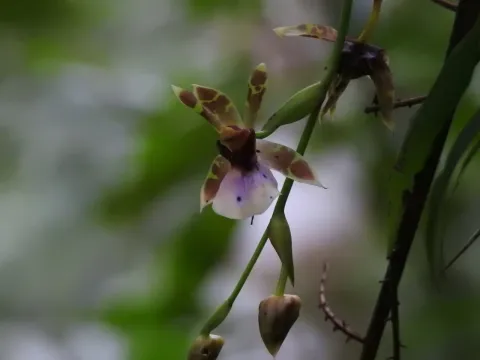
Zygopetalum
Zygopetalum
Zygopetalum is a genus of fragrant, long-lasting orchids belonging to the Orchidaceae family. Native to the tropical regions of South America, particularly Brazil, these plants grow either as epiphytes on trees or lithophytes on rocks, adapting to high-humidity environments.
What the section contains


Zygopetalum
The botanical structure of Zygopetalum features thick, rounded pseudobulbs from which leaves and inflorescences emerge. These organs serve as water-storage reservoirs, allowing the plant to survive periods of fluctuating moisture in its natural forest habitat.
For optimal growth, Zygopetalum requires bright, indirect sunlight. Exposure to direct midday sun can be detrimental, leading to leaf bleaching and heat stress, while insufficient light levels will inhibit the plant's ability to produce flowers and weaken its overall structure.
The plant thrives in a well-draining, coarse-grade substrate typically composed of pine bark, charcoal, and perlite. This mixture ensures essential aeration for the roots, preventing the anaerobic conditions that commonly lead to root decay in indoor agricultural setups.
Temperature management is critical for the developmental cycle of Zygopetalum. It prefers daytime temperatures between 18°C and 24°C, complemented by a necessary nighttime drop in temperature, which acts as a physiological trigger for the plant's blooming phase.
Zygopetalum is particularly vulnerable to fungal pathogens if moisture control is neglected. Constant dampness around the pseudobulbs often leads to black rot, an aggressive condition that requires immediate excision of infected tissues and application of fungicides.
Pest pressures primarily include scale insects and mealybugs, which exploit the nutrient-rich tissues of the plant. These pests cluster in the axils of the leaves, where they cause significant damage by depleting sap and attracting secondary fungal infections.
Spider mites represent a major threat in controlled environments with low humidity. They can rapidly multiply, causing stippling on leaves and loss of photosynthetic capacity, necessitating a swift response with acaricides to maintain crop productivity.
Bacterial spot disease often manifests as water-soaked lesions that turn dark over time. This condition is usually exacerbated by stagnant air and poor hygiene; maintaining good ventilation is the most effective cultural method to prevent the spread of such pathogens.
Regular sanitation of gardening tools is essential to prevent the mechanical transmission of viruses. In addition to chemical control, ensuring proper space between plants to allow for airflow significantly decreases the incidence of common physiological and biotic diseases.