
Spiranthes
Spiranthes
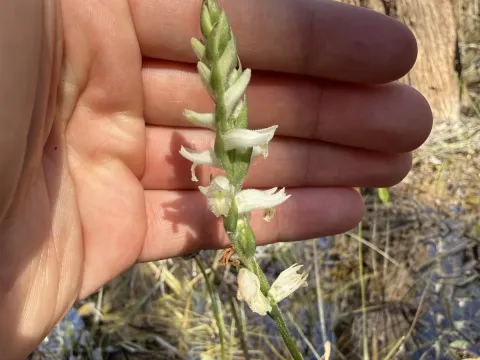
Spiranthes, commonly known as ladies' tresses, belongs to the Orchidaceae family. The seeds of this plant are extremely small and lack nutrient reserves, making cultivation a delicate task.
What the section contains
 Autumn lady's-tresses
Spiranthes spiralis
Autumn lady's-tresses
Spiranthes spiralis
 Case's ladies' tresses
Spiranthes casei
Case's ladies' tresses
Spiranthes casei
 Chinese lady's tresses
Spiranthes sinensis
Chinese lady's tresses
Spiranthes sinensis
 Creamy ladies' tresses
Spiranthes porrifolia
Creamy ladies' tresses
Spiranthes porrifolia
 Fragrant lady's tresses
Spiranthes odorata
Fragrant lady's tresses
Spiranthes odorata
 Great Plains ladies' tresses
Spiranthes magnicamporum
Great Plains ladies' tresses
Spiranthes magnicamporum
 Hooded lady's-tresses
Spiranthes romanzoffiana
Hooded lady's-tresses
Spiranthes romanzoffiana
 Lace-lip ladiestresses
Spiranthes laciniata
Lace-lip ladiestresses
Spiranthes laciniata
 Little ladies' tresses
Spiranthes tuberosa
Little ladies' tresses
Spiranthes tuberosa
 Little lady's tresses
Spiranthes brevilabris
Little lady's tresses
Spiranthes brevilabris
 Northern Slender Lady's-tresses
Spiranthes lacera
Northern Slender Lady's-tresses
Spiranthes lacera
 Shining ladies tresses
Spiranthes lucida
Shining ladies tresses
Spiranthes lucida
 Spiranthes delitescens
Spiranthes delitescens
Spiranthes delitescens
 Spiranthes eatonii
Spiranthes eatonii
Spiranthes eatonii
 Spiranthes floridana
Spiranthes floridana
Spiranthes floridana
 Spiranthes graminea
Spiranthes graminea
Spiranthes graminea
 Spiranthes hybrids
Spiranthes hybrids
Spiranthes hybrids
 Spiranthes infernalis
Spiranthes infernalis
Spiranthes infernalis
 Spiranthes longilabris
Spiranthes longilabris
Spiranthes longilabris
 Spiranthes ochroleuca
Spiranthes ochroleuca
Spiranthes ochroleuca
 Spiranthes ovalis
Spiranthes ovalis
Spiranthes ovalis
 Spiranthes praecox
Spiranthes praecox
Spiranthes praecox
 Spiranthes torta
Spiranthes torta
Spiranthes torta
 Spring ladies' tresses
Spiranthes vernalis
Spring ladies' tresses
Spiranthes vernalis
 Summer lady's-tresses
Spiranthes aestivalis
Summer lady's-tresses
Spiranthes aestivalis
 Ute ladies'-tresses
Spiranthes diluvialis
Ute ladies'-tresses
Spiranthes diluvialis
Spiranthes
In laboratory conditions, seeds are sown in nutrient agar mediums that include specific mycorrhizal fungi to stimulate germination.
Direct field sowing is rarely practiced due to the high mortality rate of seedlings without pre-existing symbiotic fungi in the soil.
The establishment period is lengthy; it can take several years for a plant to reach the flowering stage from a small seedling.
Strategic planning for propagation involves selecting sites that already host native orchid populations to ensure the necessary microbial balance.
Spiranthes requires a consistently moist, well-draining soil that mimics their natural habitats, such as meadows or open woodland edges.
The soil substrate should be rich in organic matter and maintained at a slightly acidic to neutral pH level to favor root health.
Light requirements are moderate to high; full sun or dappled shade allows the plant to photosynthesize effectively for spike formation.
Climate tolerance varies by species, but most prefer cool-temperate environments with stable moisture levels throughout the growing season.
Mulching is recommended to protect the fleshy roots from extreme temperature fluctuations and to maintain soil moisture levels.
Slugs and snails are the primary pests of Spiranthes, particularly in early spring when the new, succulent shoots are emerging.
Fungal pathogens such as Rhizoctonia can cause damping-off or root rot if the moisture levels are not strictly controlled.
Overcrowding of plants leads to poor air circulation, which significantly increases the risk of foliar fungal diseases during humid weather.
Aphids can infest the inflorescence, resulting in stunted flower spikes and reduced aesthetic value of the ornamental plant.
Integrated pest management, including regular weeding and habitat maintenance, is the most effective way to prevent severe infestations.