
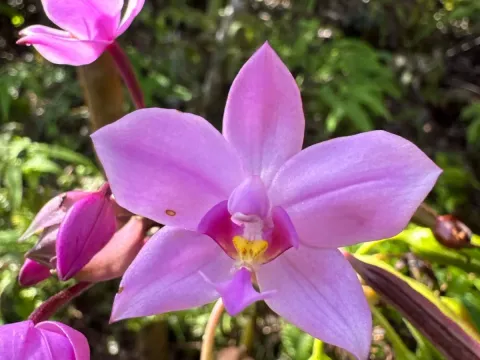
Spathoglottis
Spathoglottis
Spathoglottis is a genus of terrestrial orchids belonging to the Orchidaceae family, originating from the tropical regions of Southeast Asia and the Pacific Islands. These plants are characterized by their sympodial growth habit, featuring pseudobulbs that produce long, pleated leaves and vibrant inflorescences.
What the section contains


Spathoglottis
For optimal growth, Spathoglottis requires a tropical climate with high ambient humidity and temperatures ranging between 22 and 28 degrees Celsius. Cultivation in colder climates necessitates the use of climate-controlled greenhouses, as the plant is sensitive to cold stress and can suffer damage if temperatures drop significantly.
The substrate for this culture must be well-draining yet moisture-retentive. Commercial growers typically utilize a mix of pine bark, peat moss, perlite, and charcoal. Maintaining a balance of moisture is crucial, as the roots require consistent hydration without the risk of waterlogging, which often leads to root rot.
Adequate lighting is essential for flowering, as Spathoglottis thrives in bright, indirect sunlight. If the light intensity is too low, the plants often fail to produce flower spikes. Conversely, direct midday sun can cause leaf scorch, highlighting the need for shading systems in commercial greenhouse environments.
Commercially, Spathoglottis is valued as an ornamental crop for both landscaping and the potted plant trade. Its ability to produce multiple inflorescences throughout the year makes it a popular choice for flower growers who supply decorative markets, especially in regions with favorable year-round climates.
Common pests affecting Spathoglottis include spider mites and mealybugs, which tend to infest the undersides of the leaves. Regular monitoring and the application of integrated pest management practices are essential to prevent these pests from spreading through the greenhouse and reducing the aesthetic quality of the blooms.
Fungal infections, particularly those causing leaf spots and pseudobulb rot, are significant threats to productivity. These diseases are often exacerbated by poor air circulation and excessive moisture on the foliage. To mitigate these risks, growers must prioritize strict hygiene, proper plant spacing, and the application of preventative fungicides.