
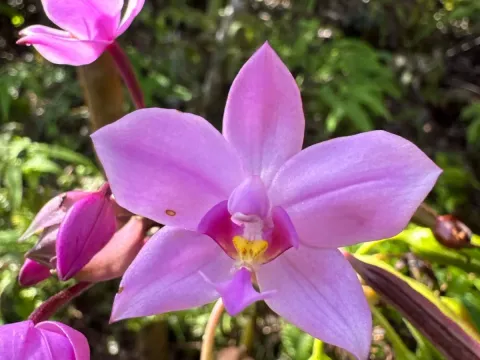
Spathoglottis
Spathoglottis Bl.
Spathoglottis is most often propagated vegetatively by dividing large pseudobulbs during repotting, which is carried out after the flowering period ends. Seed propagation of this crop in agricultural conditions is difficult due to specific requirements for mycorrhizal fungi for seed germination.
What the section contains


Spathoglottis
The optimal time for dividing the plant is at the beginning of the spring season when the plant enters its active growth phase. Divisions should have at least two to three mature pseudobulbs with a developed root system for successful establishment.
When planting, it is necessary to use specialized substrates for terrestrial orchids, ensuring good aeration and drainage. It is important to avoid burying the root collar to prevent rot during the first weeks of growth.
Rooting of divisions occurs faster when maintaining a stable temperature range from +22 to +26 degrees Celsius. It is crucial to ensure moderate substrate moisture without the risk of water stagnation at the bottom of the pot.
After planting, young plants should be shaded from direct sunlight for 7–10 days until the first signs of root growth appear. Subsequently, a gradual adaptation to more intense lighting is provided.
Spathoglottis is a genus of terrestrial orchids (Orchidaceae) comprising about 50 species native to the tropical regions of Asia, Australia, and the Pacific Islands. These plants are valued for their erect flower spikes and bright, funnel-shaped flowers gathered in dense inflorescences.
In cultivation, this orchid prefers diffused but sufficiently bright lighting. If light is insufficient, plants become leggy and refuse to form buds, while excess direct sun can cause thermal burns on the leaf blades.
The temperature regime should be moderately warm, with daytime indicators of +24–28°C and nighttime temperatures not lower than +16–18°C. The crop is sensitive to sudden temperature fluctuations and drafts, which negatively affect flower spike formation.
Requirements for air humidity are high, especially during active vegetation periods, when the indicator should be 60–80%. In home or greenhouse conditions, the use of irrigation systems or regular misting with soft water is recommended.
The soil should be loose, moisture-retentive, yet breathable. An ideal composition includes a mixture of conifer bark, peat, leaf litter, and perlite to prevent soil compaction.
The commercial use of Spathoglottis is primarily focused on decorative floriculture, where abundant and prolonged flowering is valued. With proper care, an adult plant can produce several flower spikes simultaneously throughout the season.
Crop productivity depends directly on the age of the mother plant and the number of formed pseudobulbs. Mass flowering is a key indicator of commercial success when growing in industrial greenhouses.
In regions with a tropical climate, Spathoglottis is actively used for landscaping compositions. The yield of flower spikes when grown in open ground is significantly higher than in pot culture.
Regular fertilization with mineral fertilizers containing high phosphorus and potassium levels during the budding phase can significantly increase the longevity of the inflorescences. Nitrogen fertilizers should be applied strictly during the active leaf growth period.
For commercial purposes, flower spikes are harvested when two-thirds of the buds have opened, which ensures the best product preservation during transport and longer vase life.
The main pests attacking Spathoglottis are spider mites and mealybugs, which multiply rapidly when humidity levels are not maintained. Thrips, which suck sap from young leaves, also pose a significant threat.
Among fungal diseases, root and stem rots are the most common, occurring due to regular overwatering of the substrate. Such infections often lead to the rapid death of the plant if drainage is inadequate.
Bacterial leaf spots can appear under conditions of stagnant air and high humidity. Affected areas must be removed with a sterile tool, and cut sites treated with antiseptics.
- Prevention: regular ventilation of the premises
- Treatment: application of systemic fungicides at the first symptoms
- Pest control: use of specialized acaricides and insecticides
To prevent the spread of diseases, it is necessary to avoid water getting into leaf axils and inside pseudobulbs during evening watering. Compliance with agrotechnical norms is the best defense against pathogens.