
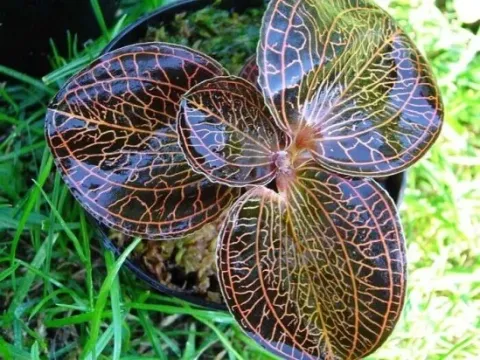
Jewel Orchid
Anoectochilus
Anoectochilus, commonly known as the Jewel Orchid, is a genus belonging to the Orchidaceae family. These plants are highly prized by collectors for their striking, velvety foliage that features intricate venation patterns, rather than their flowers.
What the section contains
 Anoectochilus
 hybrids
Anoectochilus
Anoectochilus hybrids
 Anoectochilus albolineatus
Anoectochilus brevilabris
Anoectochilus brevilabris
Anoectochilus albolineatus
Anoectochilus albolineatus
Anoectochilus brevilabris
Anoectochilus brevilabris
 Anoectochilus burmannicus
Anoectochilus burmannicus
Anoectochilus burmannicus
 Anoectochilus elatus
Anoectochilus elatus
Anoectochilus elatus
 Anoectochilus leyli
Anoectochilus leyli
Anoectochilus leyli
 Anoectochilus roxburghii
Anoectochilus roxburghii
Anoectochilus roxburghii
 Anoectochilus sandvicensis
Anoectochilus sandvicensis
Anoectochilus sandvicensis
 Jewel Orchid
Anoectochilus setaceus
Jewel Orchid
Anoectochilus setaceus
Jewel Orchid
The native distribution of this genus spans the tropical forests of Southeast Asia and parts of the Himalayas. They thrive in environments characterized by filtered light and consistent humidity, typically found on the floor of dense, damp evergreen forests.
Successful cultivation requires a highly specialized growing medium that is porous and moisture-retentive. Growers often utilize a mix consisting of New Zealand sphagnum moss, perlite, and fine pine bark to ensure adequate aeration for the sensitive root system.
These orchids are strictly tropical and require temperatures between 18 and 26 degrees Celsius. They do not tolerate cold drafts or sudden fluctuations in temperature, which can lead to rapid leaf deterioration and systemic decline of the specimen.
A high-humidity environment is non-negotiable for Anoectochilus, making them ideal candidates for growth inside terrariums or glass cases. Proper ventilation is also essential to prevent stagnant air, which can facilitate the growth of pathogens.
The primary threats to Jewel Orchids include fungal infections such as Rhizoctonia and Fusarium, often triggered by waterlogged substrate. To manage these, it is critical to use sterile equipment and maintain a balance between moisture and drainage.
Insects like spider mites and mealybugs can infest the foliage, particularly if the humidity level drops or the plant is stressed. Early detection through regular leaf inspection is the most effective method of preventing significant damage to the plant.