
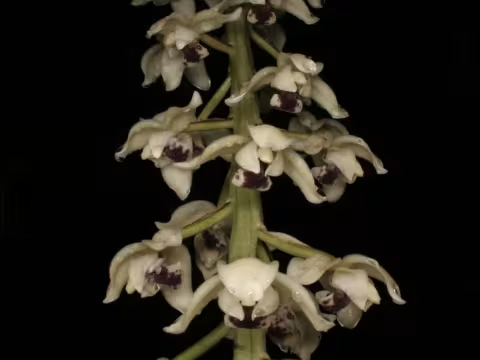
Lacaena
Lacaena
Lacaena is a genus of epiphytic orchids belonging to the Orchidaceae family. These plants are native to the tropical regions of Central America, with the primary range extending through Mexico, Guatemala, and Panama, where they are found growing on tree branches in humid forest ecosystems.
What the section contains


Lacaena
Botanically, Lacaena plants are sympodial, characterized by the development of sturdy, ovoid pseudobulbs that support broad, plicate leaves. The inflorescences are typically pendulous, bearing multiple flowers with waxy petals that provide a distinct aesthetic and visual appeal.
To cultivate these orchids successfully, growers must replicate high-humidity forest conditions, ideally maintaining humidity levels between 70% and 80%. A stable, warm temperature regime is essential, combined with efficient air movement to prevent the development of bacterial and fungal issues.
The choice of substrate is critical for Lacaena. Because they are epiphytes, they require free-draining media such as fir bark, charcoal, or specialized orchid mixes. Planting in hanging baskets or on wooden mounts is often the preferred method to accommodate their pendulous inflorescence habit.
Economically, Lacaena is primarily managed within the floriculture industry and by private collectors. While not a large-scale agricultural crop, its value lies in its rarity and the complex beauty of its blooms, requiring specialized horticultural practices for maintenance and propagation.
The primary threats to Lacaena health include root and crown rot, which are often consequences of improper watering practices or poorly ventilated cultivation environments that facilitate fungal growth.
Common pests affecting these orchids include scale insects and spider mites. Managing these threats involves maintaining rigorous hygiene, monitoring for early signs of infestation, and applying organic or synthetic pesticides when necessary to protect the plant.