
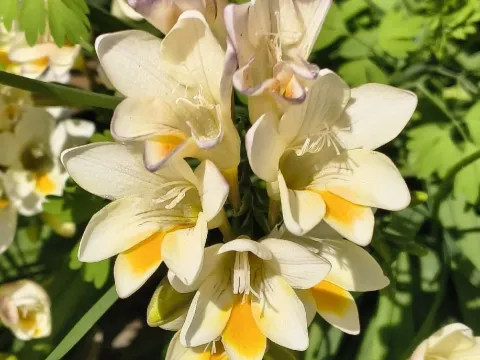
Freesia
Freesia
Freesia corms are typically planted in the spring once the soil temperature consistently reaches 8–10 degrees Celsius, ensuring optimal conditions for initial root development.
What the section contains


Freesia
For commercial flower production, corms are often pre-planted in greenhouse trays during late winter to accelerate growth and secure early seasonal harvests.
Strategic planting schedules allow growers to manipulate flowering times, making Freesia a highly flexible crop for greenhouses looking to hit specific market demands.
Proper corm preparation is vital; this includes cleaning off old scales and treating the material with appropriate fungicides to mitigate the risk of soil-borne diseases.
Planting depth varies by soil texture: 10 cm in light, well-draining soils and about 5–7 cm in heavier substrates, ensuring the young shoots have adequate space to emerge.
Freesia is a member of the Iridaceae family, favored for its exquisite fragrance and elegant, trumpet-shaped flowers that demand specific environmental parameters.
The crop thrives in temperatures between 15 and 20 degrees Celsius. Temperatures exceeding 25 degrees can cause flower abortion and drastically reduce bloom quality.
A loose, fertile, and well-drained soil with a neutral pH is essential for success. Drainage is non-negotiable, as waterlogged soil leads to rapid corm rot.
Consistent moisture is required throughout the growth phase, especially as the flower spikes begin to develop, though overhead irrigation should be avoided.
Balanced fertilization focusing on potassium and phosphorus is critical to strengthen the stems, ensuring that the heavy flower spikes remain upright and resilient.
Fusarium wilt remains the most significant threat to Freesia crops, often manifesting as root decay and foliage yellowing when soil moisture levels are poorly managed.
Bacterial soft rot can spread rapidly in confined greenhouse environments with poor ventilation, emphasizing the need for robust climate control systems.
Thrips are persistent pests that feed on developing buds, causing visible scarring and deformation that render the cut flower stems commercially unviable.
Spider mites often attack the foliage during hot, dry spells, leading to stunted growth and reduced photosynthetic capacity in the plants.
Effective management involves strict sanitation protocols, regular inspection of the crops, and the use of integrated pest management (IPM) to maintain plant health.
Harvesting should occur early in the day when the first one or two florets on the spike have opened, ensuring the flowers continue to bloom in the vase.
Stems must be cut with sharp, sterilized tools, leaving enough foliage to allow the corm to regenerate energy for the next growing cycle before dormancy.
Post-harvest care involves immediate hydration in water treated with flower food to maintain the turgor of the delicate, aromatic blossoms during distribution.
Grading is essential for market quality; stems are sorted by length and bloom count to meet standard floral industry requirements for wholesale shipments.
After the foliage dies back, the corms are lifted from the soil, cleaned, and stored in a cool, dry, and ventilated environment until the next planting season.