
Freesia hybrids
Freesia hybrids
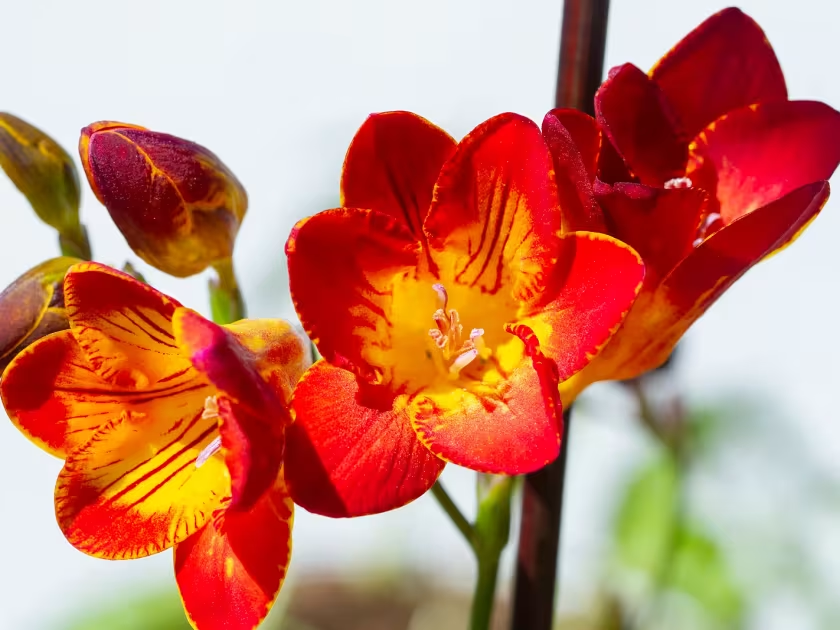
Description
Sowing dates
Freesia hybrids are popular perennial corm-based ornamental plants belonging to the Iridaceae family. In open-field conditions, planting is typically carried out in spring once soil temperatures reach 10–12°C, ensuring the risk of late frosts has passed.
For greenhouse cultivation, producers utilize a staggered planting strategy, with new batches planted every 2–3 weeks. This practice allows for a continuous supply of cut flowers throughout the year, meeting market demand efficiently.
Pre-planting treatment of the corms is essential for successful growth. Corms should be stored at 20–25°C for several weeks prior to planting to stimulate the root system and synchronize the emergence of the crop.
The planting depth should be adjusted according to soil type, generally ranging from 5 to 8 centimeters. Adequate depth is necessary to provide structural support for the stems as the plants mature and produce heavy inflorescences.
Propagation is primarily achieved through cormels (offsets) that develop around the parent corm. Using healthy, large-sized cormels is key to maintaining high vigor and the characteristic flower quality of the hybrid cultivar.
Growing requirements
Freesia hybrids require well-draining, light, and fertile soil with a neutral pH level between 6.0 and 7.0. Poor drainage is the leading cause of root rot and should be mitigated by adding organic matter or sand to heavy clay soils.
Climate control is vital, as these plants thrive in moderate temperatures between 15°C and 20°C. Exposure to temperatures exceeding 25°C significantly hinders bud development and can lead to poor flower formation.
Maintaining optimal humidity levels (60–70%) is crucial for the plant's physiological processes. Excessive moisture in the foliage can encourage fungal pathogens, while too little humidity can stress the plants and cause tip burn.
Nutrient management focuses on high-potassium and phosphorus fertilizers during the active growing phase. Excessive nitrogen application should be avoided, as it encourages soft, weak stems that require additional support.
Light intensity significantly affects the quality of the spikes. During the short days of winter, supplementary lighting is required to provide 12–14 hours of daily light, ensuring strong, vertical growth and vibrant flower colors.
Yield
Yield is measured by the number of high-quality floral spikes per square meter. Professional growers can expect between 80 and 120 stems per square meter, depending on the cultivar’s traits and the precision of environmental controls.
The quality and size of the initial corms are the most important predictors of yield volume. Larger corms store more energy, leading to multiple spikes per plant and superior stem length, which is a major factor in market grading.
Modern greenhouse operations use drip irrigation and fertigation systems to maximize yields. This precision approach allows for specific nutrient concentrations at different growth stages, reducing plant stress and increasing crop uniformity.
The growth cycle from planting to harvest ranges from 90 to 120 days. Growers often time their planting dates based on regional climate data to reach peak bloom during periods of high demand, such as spring holidays.
Post-harvest grading ensures maximum financial returns. Stems are sorted based on length, straightness, and the number of open florets per spike. Standardized grading allows for clear market pricing and better brand reputation.
Main diseases and pests
The most significant threats to Freesia hybrids include fungal pathogens like Fusarium and Penicillium, which target the corms. Prevention involves pre-planting fungicidal dips and maintaining a strict, dry storage environment.
Insects such as thrips and spider mites are common pests that damage the delicate flower buds and foliage. Heavy infestations can distort the stems, rendering the crop unsellable, thus requiring integrated pest management (IPM) strategies.
Viral diseases pose a severe risk, as they are non-curable. These viruses are often spread by insect vectors or infected tools, emphasizing the need for rigorous hygiene protocols, such as disinfecting equipment between tasks.
Effective prophylaxis includes early-season monitoring for pest pressure and ensuring that the greenhouse environment is not overly humid, which limits the spread of airborne spores and mite populations.
- Fusarium corm rot
- Thrips
- Two-spotted spider mites
- Bacterial leaf spot
- Freesia mosaic virus
Harvesting
Harvesting should occur in the early morning to ensure maximum turgor. The ideal time to cut is when the first two to three lower florets are fully open, and the remaining buds on the spike show mature color.
Immediately after cutting, stems must be placed in clean, chilled water with floral preservatives. This treatment is essential to support the continued development of the remaining buds and to extend the post-harvest vase life of the flowers.
Once harvested, the spikes should be cooled rapidly to temperatures between 2°C and 5°C. Lowering the temperature slows down the respiration rate, preserving the energy stored in the stems for the final consumer.
At the end of the season, after the foliage naturally yellows and dies, the replacement corms are harvested. They are cleaned, dried, and stored in a cool, dark, and well-ventilated area to remain dormant until the next planting season.
Proper corm storage is the cornerstone of future yields. Maintaining consistent temperature and humidity during the storage phase prevents premature sprouting and ensures the plant will have enough energy for a productive next cycle.