
Dietes grandiflora
Dietes grandiflora N. E. Br.
Description
Growing requirements
Dietes grandiflora, commonly known as the fairy iris or large-flowered wild iris, belongs to the Iridaceae family. Originating from South Africa, this perennial plant is widely appreciated for its robust nature and evergreen foliage.
The plant features long, sword-shaped leaves that grow in upright fans, reaching heights of up to 1.5 meters. These structural leaves make it an excellent choice for ornamental landscaping and architectural garden designs.
Regarding environmental conditions, Dietes grandiflora thrives in full sun to partial shade. While it is quite adaptable, providing it with consistent sunlight ensures the most prolific blooming throughout the growing season.
Soil requirements are relatively straightforward: the plant prefers well-drained, fertile soil. It is vital to ensure that the site does not hold standing water, as waterlogged soil often leads to root rot issues.
Climate-wise, this species is suited for warm temperate and subtropical regions. In areas prone to heavy frost, it should be kept in pots and protected during the winter months, as it is not fully hardy in freezing climates.
Yield
The primary utility of Dietes grandiflora is within the horticultural and landscaping sector. Its popularity stems from its low-maintenance profile and its ability to withstand periods of drought once established.
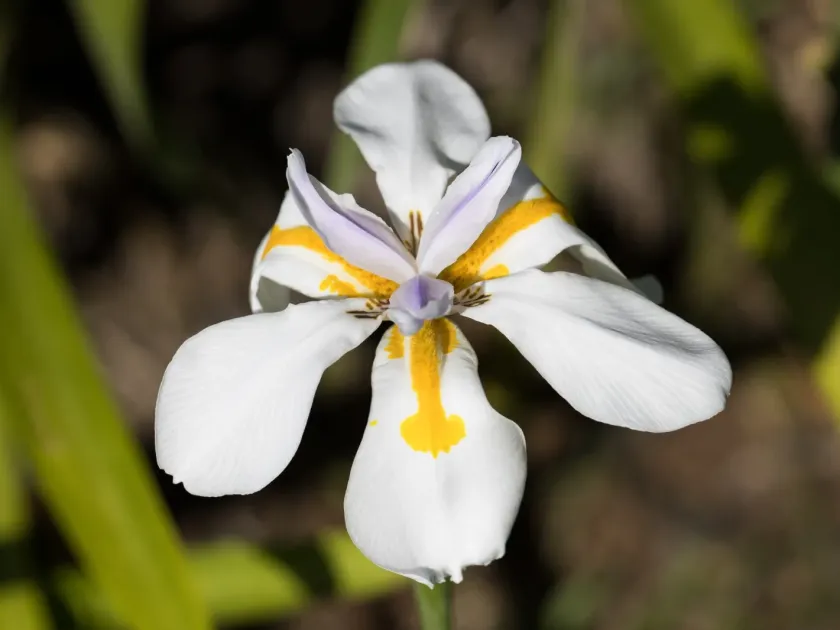
Flowers are a hallmark of the species, displaying white petals with distinctive yellow and violet markings. Although individual flowers are ephemeral, a mature plant produces a constant succession of blooms, providing visual interest for months.
Propagation is most successful through the division of rhizomes. This practice allows gardeners to multiply their stock effectively, ensuring that new plants retain the characteristics of the parent specimen.
Beyond its aesthetic appeal, the plant serves functional roles in soil conservation. Its dense root system helps stabilize slopes, making it a sustainable choice for erosion control in residential and public parks.
In terms of longevity, a healthy plant can thrive in the same location for many years. Regular maintenance is minimal, primarily involving the removal of spent flower stalks to keep the plant looking tidy.
Main diseases and pests
Dietes grandiflora is generally resilient, but it is not immune to potential threats. Overwatering remains the most significant risk, as it directly promotes fungal root pathogens that can cause total plant failure.
Slugs and snails are common pests that feed on the foliage, leaving unsightly holes. These pests are particularly active during humid weather and can be managed through mechanical barriers or environmentally friendly bait.
In indoor or greenhouse settings, spider mites may become an issue if the air is too dry. Regularly misting the plant or increasing air circulation can act as a deterrent to these tiny pests.
Leaf spot diseases can occur if the plant is exposed to poor ventilation. Ensuring adequate space between individual plants and trimming away overcrowded or decaying leaves will improve airflow and prevent infection.
Early detection and intervention are key to maintaining the plant's health. Routine monitoring for signs of stress, such as yellowing leaves or stunted growth, allows for quick adjustments to the watering and fertilization schedule.