
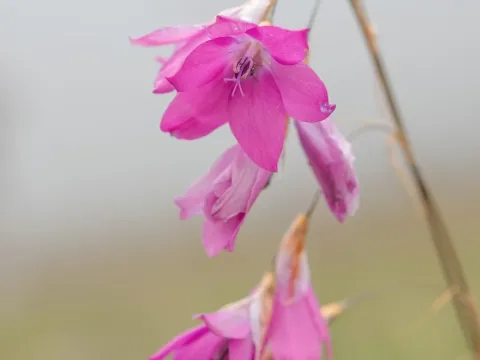
Dierama
Dierama K. Koch
Dierama is typically propagated via seeds or by division of mature clumps. Seeds should be sown in containers during early spring, using a well-drained, light potting mix with a temperature kept between 18 and 20 degrees Celsius.
What the section contains

Dierama
Seed germination is enhanced by cold stratification, which prepares the seeds for growth. Once the seedlings develop several true leaves, they are pricked out into individual pots to strengthen their root systems before transplanting into the garden.
Vegetative propagation involves dividing established clumps during the spring growing season. Great care must be taken during this process, as the roots are delicate and do not easily recover from rough handling.
After transplanting, it is crucial to keep the soil consistently moist for several weeks to ensure successful establishment. Gardeners should avoid frequent relocation, as Dierama takes considerable time to adjust to new soil conditions.
When planting in groups, a spacing of at least 40 to 50 centimeters between plants is recommended. Proper spacing prevents overcrowding, which is essential for the healthy development of their iconic arching stems.
A member of the Iridaceae family, Dierama originates from South Africa and thrives in sunny locations protected from strong winds. Its graceful, nodding flower spikes require a stable environment to prevent breakage.
Soil quality is paramount; it must be fertile, rich in organic matter, and possess excellent drainage properties. Heavy clay soils must be amended with sand or gravel to prevent water stagnation, which can be lethal to the plant.
While somewhat hardy, the plant requires winter protection in cooler climates, including thick mulching to shield the roots from frost. Excessive winter moisture can easily lead to root rot if the drainage is poor.
Regular watering is essential during the flowering season, though direct water on the foliage should be avoided to prevent mildew. Drought tolerance increases once the plant is mature and well-established in the ground.
Fertilization should be limited to balanced, low-nitrogen formulas applied early in the season. Over-fertilization with nitrogen leads to lush foliage at the expense of flower production, which is the plant's main ornamental value.
Root rot is the most significant threat to Dierama, often caused by poor drainage or overwatering. Maintaining a well-aerated soil structure is the most effective preventative measure against fungal and bacterial issues.
Slugs and snails are common pests that feed on the tender young leaves, particularly during damp spring weather. Implementing physical barriers or eco-friendly baits can help minimize damage to the foliage.
Aphids can occasionally target the flower spikes, draining the plant's vitality and potentially deforming the buds. Early detection through regular inspections allows for effective control using mild insecticidal soaps.
Spider mites may become a nuisance in hot, dry conditions, causing leaves to yellow and lose their vigor. Maintaining a healthy garden environment and removing weeds help create less favorable conditions for mite infestations.
Foliar diseases, such as leaf spot, may occur in conditions of poor air circulation. Ensuring the garden beds are not overcrowded is a vital cultural practice to minimize the spread of airborne spores and pathogens.